

How Nigeria's Media Editors, its Vice President, a Church Cardinal, a Governor, a Monarch, a Cabinet Minister and its Electoral Chief converged on Enugu to confront the age of the perfect lie.
By Celestine Okafor (Editor-in-chief)
Enugu state, otherwise referred to as the Coal City state, and also the regional capital of the old Eastern Region of Nigeria, has seen many gatherings in its long, storied life. It is equally better remembered as the seat of the defunct Republic of Biafra. The state is heart beat of Igbo intellect and industry.
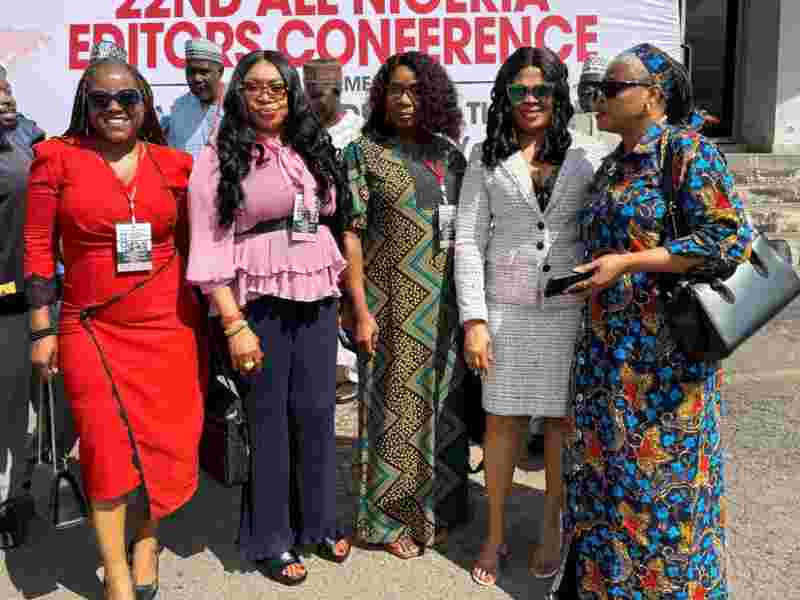
But today, the morning of Thursday, September 24, 2026, Enugu became something else entirely: a war council. The occasion was the 22nd All Nigeria Editors Conference (ANEC 2026), the annual pilgrimage of the Nigerian Guild of Editors (NGE), that guild of gatekeepers whose pens, and now, their keyboards and verification tools, stand between the Nigerian public and the abyss of manufactured falsehood.
The theme of the conference chosen was almost prophetic in its precision: "The Ballot, the Media and the Task of Keeping Democracy Alive." The sub-theme was a quiet scream of alarm: "When Lies Look Real: Detecting and Debunking AI Disinformation Before, During and After Election."
On the record of the Guild, over 300 media decision-makers, proprietors, editors-in-chief, and captains of the Nigerian press filed into the ornate Dome of Enugu International Conference Centre hall located opposite Micheal Okpara Square at the Independence Layout District of the coal city state.
What the media chieftains heard over the course of the conference was not the usual diplomatic pleasantries and carefully worded addresses. It was something closer to a collective exorcism - distinct voices, from the highest offices in the land, each circling the same terrifying truth: Nigerian democracy is standing at the edge of a cliff, and the ground beneath it is being digitally doctored.
Nigeria's Vice President, Senator Kashim Shettima in his opening address read via a zoom from the United States of America where he is representing Nigeria at the on-going global 81th Edition of the Conference of the United Nations General Assembly (UNGA), recognized the NGE as crucial Gatekeepers of the Nigerian society. Shettima whose words, read to the gathering, carried the weight of the Villa itself, did not mince words with the editors. He said, "The ballot gives citizens a voice, but that voice can only be meaningful when citizens have access to credible information on which to make their choices".
The Vice President praised the media as the fourth estate "because it performs a duty that no democracy can do without" — interrogating power, informing citizens, shaping public debate, preserving institutional memory. But it was his reflection on artificial intelligence that revealed how seriously the Nigeria's highest levels of government are taking the threat. "When technology can manufacture convincing falsehoods at unprecedented speed, professional journalism becomes more important, not less". Shettima pointed out that, "The editor remains a crucial gatekeeper between information and manipulation."
In a moment of rare political vulnerability, the Vice President did not just praise the media, he asked for something important to him and the government led by the All Progressive Congress (APC): "As you scrutinize government, I also urge you to continue telling the full story of our country, including where progress is being made." While offering statistics, Shettima informed that the Nigeria's economy under President Bola Ahmed Tinubu's government grew by 4.43 per cent in the second quarter of 2026, up from 4.23 per cent a year earlier", suggesting that inflation in the country had moderated.
But he quickly added a caveat that sounded almost like a plea: "We recognize that the real test is what these improvements mean for the cost of living and the purchasing power of ordinary Nigerians." It was a delicate dance — a government asking for balanced coverage while acknowledging that the story it wants told is not yet fully written. Hear Shettima's admittance of evident reality: "These numbers give us reason for confidence, but not for complacency".
However, if Vice President Shettima's message was measured, that of Jigawa State Governor, Umar A. Namadi, brought the precision of a Chartered Accountant and the passion of a reformer into the ANEC 2026 event. The governor's goodwill message was something of a masterclass in both history and policy. He traced the lineage of the Nigerian Guild of Editors (NGE) back to 1961.
Governor Namadi opines that only a year after Nigeria gained independence and in the subsequent years, the likes of former Editor of the Nigerian Tribune newspaper and first civilian governor of Lagos state, Alhaji Lateef Jakande (alias Baba Kekere) and Prince Tony Momoh, Chris Okolie, Ray Ekpu, Garba Shehu, Oluremi Oyo, Baba Dantiye, and even the current President of the Guild, Mr Eze Anaba, have strengthened the NGE and taken it to greater height. This is clearly an honour to the giants who built the Nigeria Guild of Editors (NGE). He however noted that some other illustrious NGE members may even have paid the ultimate price rather than compromise its ideals.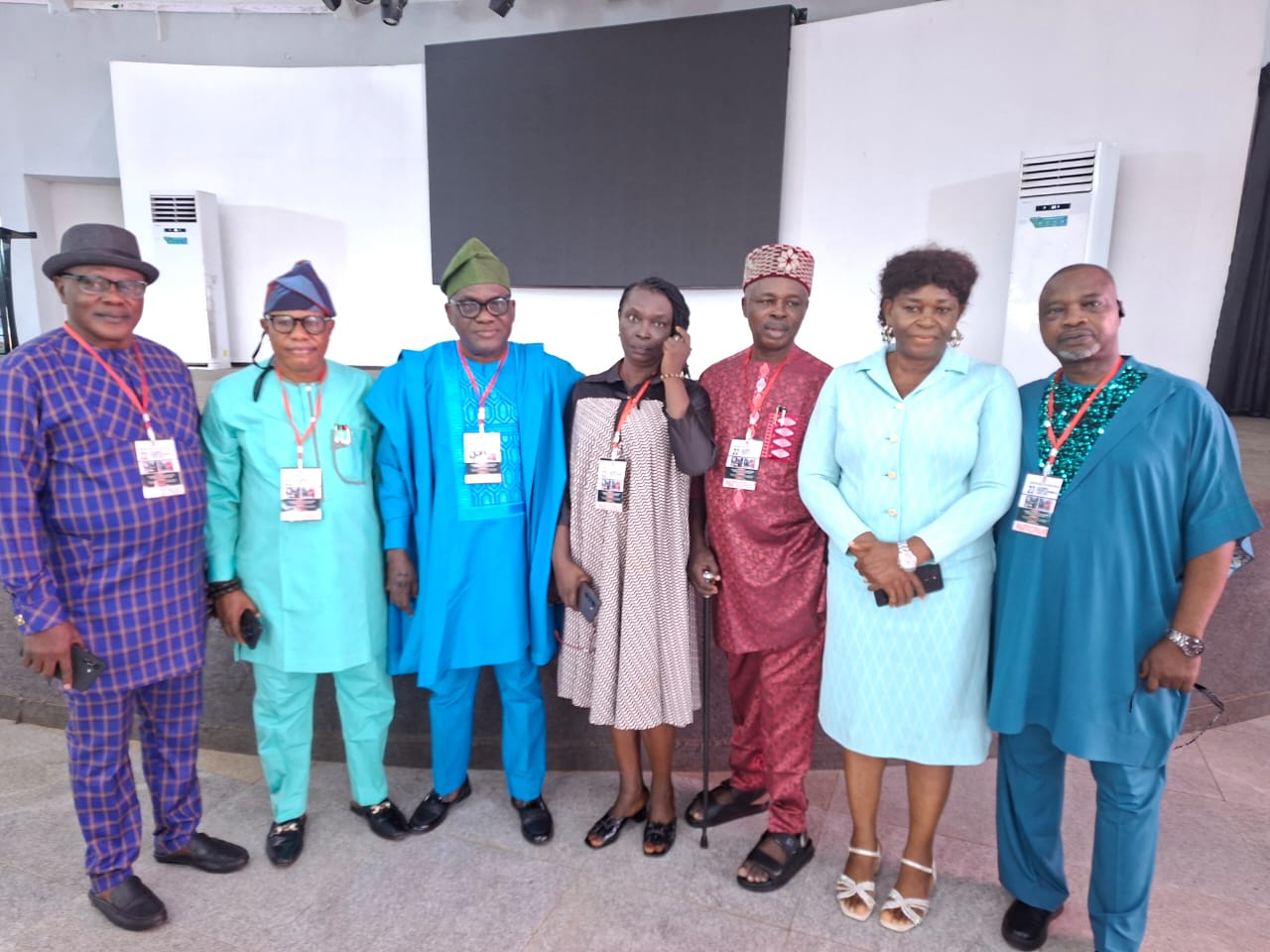
But the Jigawa governor's most provocative contribution to the ANEC day one event, was his redefinition of journalistic ambition. "For me, the challenge before editors should not be about 'breaking news' (a.k.a who breaks the news first), but about ensuring responsible publishing, protecting the truth, and helping citizens understand it with clarity and confidence."
In an era where speed is worshipped and virality is currency, governor Namadi's words landed like a rebuke. He urged the media to "invest in verification systems, newsroom fact-checking capacity, media literacy, ethical use of technology, and collaboration across platforms." Then he did something unusual for a Nigerian politician: he cited the law, that is, Section 24 of the Cybercrimes Act (as amended in 2024).
He noted that this section criminalizes knowingly false online messages intended to cause a breakdown of law and order. Section 123 of the Electoral Act 2022 prohibits false statements about candidates. Speaking in collective terms (the politicians and the media), governor Namadi exhorts that, "Our task, is to strengthen public awareness, ensure fair and consistent enforcement, and close any gaps through clear, proportionate, and rights-respecting measures."
And he brought receipts from his own state. He reveals that the 'Gwamnati da Jama'a (Citizens' Engagement)' Programme takes government directly to citizens across all the 27 Local Government Areas of Jigawa state of North-west zone. In this programme package, elected officials present scorecards, answer questions and translate feedback into policy. This, in essence, is democracy as conversation, the very thing AI disinformation is designed to destroy.
For the retired radical and puritan priest of the Catholic church of Nigeria, His Eminence Cardinal John Onaiyekan in his own address at the Editor's annual conclave, a democracy built on illusion is not democracy but sheer drama. His voice that silenced the hall room. At 82 years of his birth and in the course of his priesthood, John Cardinal Onaiyekan, Archbishop Emeritus of Abuja, has seen Nigeria rise and stumble. He has seen hope and despair, in a country so economically gifted by mother nature, and he has equally seem military coups and fragile democratic dawns in Nigeria.
Onaiyekan described himself to the converging editors as "a layman in the field" of media and elections. What followed was the most theologically rigorous, historically sweeping, and morally unflinching keynote address of the conference. He aging priest
took the gathering on a journey through the history of governance itself — theocracy, monarchy, dictatorship — before landing on democracy. Even the ancient Greek Republic, he reminded his audience, was never truly government of all the people. "It was the government of a small elite of rulers over the rest of the Greek Republic."
The fire-eating Cardinal did not spare his country. In his reasoned logic, the "democracy we inherited was weak, and becomes clear when we realize that it collapsed under military rule soon after it started." He recounted the long night of military rule from 1966 to 1999, with "only one brief interval of the Shagari regime." With the precision of a surgeon in a medical theatre room, he dissected the failures of Nigeria's post-1999 democracy.
On elections and it's conduct in Nigeria, Onaiyekan was very devastating in his delivery. Hear him: "It seems that the quality of the elections has been reducing from one election to the other, and this is not good news at all." He even went ahead to list the pathologies: politicians with a "do-or-die" attitude; the abuse of Federal Character and zoning; an INEC that is "set up by government and controlled by the government, which itself, during elections, is no longer only government, but also a contestant"; the weaponization of incumbency; security agencies that intimidate rather than protect; and a judiciary whose election tribunals have "seriously dented the image of this hallowed institution", were the very roadblock to a progressive, enduring and sustainable democracy in the country.
Cardinal Onaiyekan, however, offered seven concrete proposals for the next National Assembly — a blueprint for electoral reform that deserves to be studied in every newsroom and in every political party office in Nigeria: first, is the independent appointment of INEC leadership that is not dependent on the President or governors who are themselves contestants; second, an urgent need special election tribunal dedicated solely to election cases, with the onus of proof placed squarely on INEC; third, a locus standi for citizens, not just candidates, to challenge election results; fourth, a disposal of all tribunal cases before swearing in any candidate; fifth, a provision for independent candidates, at least at local government level; sixth, a 50% minimum threshold for presidential victory, with a run-off if necessary and seventh, strict rules against cross-carpeting, requiring legislators who change parties to seek a fresh mandate through a bye-election.
Onaiyekan then dropped a line that hung in the air like a verdict: "A situation where a candidate is declared a winner and our president with only 30% of the votes cast puts doubt on the authenticity of the victory. It is a victory by minority votes."
On the media, the Cardinal was equally direct, infact, re-echoing the immortal words of Justice George Alexander Sutherland, when he canvassed that, "A free press is necessary for a genuine democracy. From this point of view, I think we can say that the situation in our country Nigeria is not so bad." But he warned that press freedom must be used with responsibility. "The relatively good margin of freedom which the Nigerian Media now enjoys should be used with responsibility and professionalism, to rescue democracy in our nation, to uphold and to nurture it for a great nation under God." Indeed, Cardinal Onaiyekan, brought moral authority in his presentation.
In his own added voice, the chairman of conference and the monarch of Onitsha, His Royal Majesty Igwe Nnaemeka Alfred Achebe, the Obi of Onitsha, brought poetry. The eminent king, while welcoming
the editors to Enugu, "the Coal City of Nigeria", not with a history lesson, but with a warning wrapped in metaphor, opines that "Democracy is not a monument we erect and then walk away from, it is more like a fire lit to keep the house warm. It must be tended, fed, protected from wind and rain, or it dies quietly in the night while everyone believes it still burns."
The imagery was somewhat devastating because it was true. And the Obi of Onitsha who has watched Nigeria's journey "from the optimism of independence, through the turbulent years of military rule, into the fragile and still-unfinished project of democratic self-governance," knew exactly what he was describing. He spoke of Igbo republican and democratic tradition, which is that people's king (an Igwe or Obi) "does not rule by decree" but "rules in council, in dialogue, in the constant testing of truth against the wisdom of elders and the voice of the people." The ballot box, he argued, "is not an import grafted onto our soil. It is a modern vessel for an old African value: that legitimate power flows from the consent, the voice, and the informed judgment of the people."
But it was on the sub-theme of AI disinformation that the Obi became most animated. He warned that, "We are living through a transformation as profound as the invention of the printing press, and perhaps more dangerous". Igwe Achebe added that, "For centuries, falsehood required a human liar, someone who had to look you in the eye, construct a story, and hope you believed it. Today, falsehood can be manufactured by machines in seconds."
He described the nightmare scenarios with chilling specificity: "A voice that sounds exactly like a governor can now say something that the governor never said. A video can show a candidate in a place he never was. An image can depict violence that never occurred, timed precisely to inflame passions on the eve of an election."
And then he identified the uniquely Nigerian vulnerability: "It is uniquely suited for our children because it exploits the very things that make our democracy vibrant — our diversity, our passionate political engagement, our deep trust in community and kinship networks as sources of information. The same social fabric that has made us resilient can now become the very medium through which falsehood spreads fastest, precisely because we trust the neighbour, the town union, the family WhatsApp group, more than we trust a stranger."
The Obi of Onitsha laid out three responsibilities for the editors. First, he urged them to deploy verification before speed. "In the old order, being first with the news was honour. In this new order, being first with a lie dressed as news is a betrayal of the public trust." the second, he said, is literacy and guide. "You must become teachers, helping ordinary citizens, from the market woman in Onitsha to the undergraduate in Nsukka, to develop their own instincts for scepticism, without curdling that scepticism into a cynicism that trusts nothing at all. A citizenry that believes everything is as dangerous as one that believes nothing."
Third, he emphasized courage. "Debunking a lie that flatters your own political camp is far harder than debunking one that flatters your rival. True journalistic integrity in this era will require you to correct falsehoods regardless of who benefits from them."
And then, the charge that will echo through Nigerian journalism for years to come: "Even if politicians, electoral body, institutions, and other things fail, you must be the ultimate last man standing in the task of defending democracy."
However, in his address to the elite editors, Nigeria's Minister of Information and National Orientation, Alhaji Mohammed Idris, observed that "When the Public Can No Longer Distinguish Truth from Fabrication, Trust Begins to Suffer". Idris brought the government's perspective but with a frankness that surprised many in the room.
He began with the calendar. "Nigeria will hold its next general elections in 2027. INEC has scheduled the Presidential and National Assembly elections for January 16, 2027 and the Governorship and State Houses of Assembly elections for February 6, 2027. We are therefore entering a period in which the quality of information available to citizens will matter enormously."
The Minister did not shy away from the evident threat. "Artificial intelligence has made it possible to create convincing photographs, videos, audio recordings and documents that may appear genuine when they are not. A false statement can be produced in the voice of a public official. A fabricated video can be circulated within minutes. An old photograph can be presented as a current event." But his most profound observation was about the deeper damage. "The danger is not simply that people may believe a lie. The greater danger is that citizens may eventually stop believing anything. When the public can no longer distinguish between what is true and what is fabricated, trust in the media, elections and public institutions begins to suffer."
The minister called for fact-checking to become "part of the newsroom culture," offering a list of questions every editor should ask: Who said this? What is the evidence? When was this photograph taken? Is this video original? Has the source been independently verified? Is the headline supported by the story? Are we reporting a fact, an allegation or an opinion?
Idris also defended the government's record while acknowledging the media's role in scrutinising it. He cited the removal of the petrol subsidy, foreign exchange reforms, improved revenue mobilisation, over 2,700 kilometres of highways under construction as of May 2026, rail projects, the Nigerian Education Loan Fund, and interventions in power, housing, agriculture, and digital connectivity.
"A responsible press should neither exaggerate achievements nor ignore them," he said, adding that, "It should examine them, verify them, ask difficult questions, and allow citizens to understand both the progress and the shortcomings. That is how public trust is built." He also highlighted the Federal Government's pursuit of financial autonomy for Nigeria's 774 local government councils — a reminder that democracy is not only about national elections but about governance at every level.
And he issued a challenge to the media: "The media should also resist the temptation to become part of the political contest. The job of the professional journalist is not to amplify every claim simply because it is politically attractive. The job is to establish what is true, provide context and allow citizens to make their own judgments."
Chairman of the Independent National Electoral Commission (INEC), Professor Joash Amupitan (SAN) said in his opening contribution, that the nation "Cannot Demand Integrity from a Hungry Journalist". The remarks of the man who will oversee the 2027 general elections were billed as a speech but, in fact, came like a confession, a warning, and a challenge. Amupitan began with the scale of the challenge: "Managing over 93 million registered voters, 176,847 polling units, and deploying more than 185,000 Bimodal Voter Accreditation System (BVAS) devices for a nation of Nigeria's scale", is herculean. The academic legal luminary however said that the, "AI adoption cannot be treated as a mere IT project. It must be executed as a comprehensive, structural institutional reform."
He then made a revelation that stunned the room: INEC has already begun deploying intelligent AI tools directly within its Results Management process. This technology automatically scans and detects discrepancies or administrative errors in result records before final validation."
But he was quick to add a crucial caveat: "Technology must complement, rather than replace, constitutional institutions. AI must strengthen electoral integrity, improve public service, and always remain under human control. Every automated result check remains strictly subject to human auditing and legal verification."
INEC, he revealed, has established a dedicated Artificial Intelligence Division within its ICT Department, crafted a comprehensive AI Roadmap and Governance Framework built on five pillars — Human Oversight, Transparency and Accountability, Data Protection, Cybersecurity, and Public Trust — and engaged in high-level bilateral meetings with Microsoft, Google, and the International Foundation for Electoral Systems (IFES) to fortify digital infrastructure ahead of 2027. He cited the Osun Off-cycle Governorship Election of August 15, 2026, as a proof of concept: 94.5% of polling units opened by 8:30 a.m., 5,130 BVAS devices deployed, original result sheets scanned and uploaded to the IReV portal. But he was honest about the scale of the challenge: "Osun was a single-state exercise. 2027 will be across 36 states and the Federal Capital Territory."
And then, the moment that truly set the conference alight was when Professor Amupitan did something no INEC chairman had done before. He spoke directly to the media owners in the room — not about their editorial responsibilities, but about their moral hypocrisy.
"We cannot demand unyielding ethical fortitude from a journalist whose basic economic survival is constantly threatened. A reporter operating under extreme financial insecurity, unpaid salaries, and inadequate welfare cannot serve as an unassailable fortress against political inducement, fake news, and brown-envelope pressures."
He was just getting started. "I speak directly to the Managing Directors, Publishers, Chief Executive Officers, and media owners gathered in this hall: media performance depends heavily on staff welfare. If we truly view journalists as frontline guardians of democracy, their socio-economic security must be treated as a strategic priority, not an administrative afterthought. A poorly compensated journalist is vulnerable; a financially neglected newsroom is fertile ground for compromise, weakening the democratic architecture we seek to protect."
And to prove he was not just preaching, he brought receipts. INEC, he announced, had established the Consolidated Election Management Body Salary Structure (CEMBSS), pulling its staff outside the regular Civil Service structure effective January 1, 2026. It was implementing an upgraded salary and welfare package for INEC staff, Commission Members, and Resident Electoral Commissioners. It had increased overheads to State Offices by 150% effective July 1, 2026.
"If an election management body can overhaul its financial structures to protect institutional integrity, I urge the leadership of the Nigerian media industry to undertake a similar commitment. Investing in staff welfare is a civic duty essential to keeping Nigerian democracy alive."
The room, by all accounts, was stunned. It was not the kind of speech Nigerian editors were used to hearing from INEC. It was a mirror held up to their own house, and the reflection was not flattering.
Amupitan then turned to the AI disinformation threat, describing it in terms that made the blood run cold: "A photorealistic video of an electoral official purportedly declaring false results in a dark room. A cloned audio file of an INEC Resident Electoral Commissioner instructing staff to manipulate voting devices on election eve. A synthetically generated letterhead carrying the Chairman's forged signature, announcing the sudden postponement of voting in select states. Manipulated result sheets engineered to mimic official security features, flooded onto social media minutes after polling closes to create an illusion of fraud before collation even begins."
The primary danger, he said, "is not merely that it tricks citizens into believing a specific falsehood, but it causes the systemic destruction of public trust. When everything can be faked, citizens begin to doubt genuine, verified facts provided by constitutional authorities. When deepfakes render lies believable, real truth is greeted with skepticism. Cynicism replaces civic engagement, leading voters to ask: Why stand in line for hours if the outcome is already manipulated on a screen? That mental retreat is where democracy begins to decay."
Amupitan called on editors to "institutionalize fact-checking desks and integrate digital verification tools, deepfake detection software, and forensic image analysis into daily breaking news workflows." He urged them to resist premature result declarations, reminding them that "under the Electoral Act, statutory authority to declare election results rests exclusively with INEC." And he also challenged them to "use our platforms to educate citizens on spotting synthetic content, fake letterheads, and algorithmically generated rage-bait."
He quoted John Lewis: "Democracy is not a state. It is an act, and each generation must do its part to save it." And Nelson Mandela's famous exhortation: "It always seems impossible until it's done."
What made ANEC 2026 extraordinary was not any single speech. It was the convergence of powerful and influencial voices and one truth.
The Vice President, speaking for the federal government, acknowledged that the media's role is indispensable and asked only for balance. The Governor of Jigawa, speaking for the states, offered a model of citizen engagement that makes disinformation harder to spread. The Cardinal, speaking for the moral conscience of the nation, laid out a seven-point blueprint for electoral reform and warned that democracy built on illusion is not democracy but drama. The Obi of Onitsha, speaking for tradition and history, declared that democracy is a fire that must be tended — and that editors are its keepers. The Minister of Information, speaking for the government's communication apparatus, admitted that the greater danger of AI disinformation is not that people believe lies but that they stop believing anything. And the INEC Chairman, speaking for the institution that will conduct the 2027 elections, admitted that the electoral body cannot demand integrity from a media that does not pay its journalists a living wage.
Each voice was distinct. Each came from a different seat of power, political, traditional, religious, administrative. But they all said the same thing: Nigeria's democracy is under attack, the weapon is AI-generated disinformation, and the last line of defence is the editor.
As the nation begins a countdown to a historic 2027 general elections, the road promises a tough terrain. The numbers are now etched into the national calendar. The Presidential and National Assembly elections are scheduled for Saturday, January 16, 2027, while the Governorship and State Houses of Assembly elections are slated for February 6, 2027. That is not much time. In the months ahead, Nigeria will be flooded with synthetic content — deepfake videos of candidates, cloned audio of officials, fabricated result sheets, algorithmically amplified outrage. The WhatsApp groups that connect families and town unions will become vectors of viral falsehood. The social media timelines that shape public opinion will be weaponized in ways we have not yet imagined.
The editors who gathered in Enugu know all these. They have been warned by the Vice President, the Cardinal, the Obi of Onitsha, the Jigawa governor, the Minister, and the INEC Chairman. They have been given a blueprint for electoral reform, a charge to prioritize verification over speed, a warning that a citizenry that believes nothing is as dangerous as one that believes everything, and a reminder that democracy is a fire that must be tended or it dies quietly in the night while everyone believes it still burns.
Perhaps, the Obi of Onitsha said it best. "Even if politicians, electoral body, institutions, and other things fail, you must be the ultimate last man standing in the task of defending democracy." It was a charge that echoed the Cardinal's conclusion, the Governor's plea, the Minister's warning, the Vice President's hope, and the INEC Chairman's challenge. In every genuine democracy, the ballot belongs to the people. The truth belongs to the people. And the editors — the gatekeepers, the verifiers, the the last line of defence — belong to the people too.
As the 2026 All Nigeria Editors Conference draws to a close in Enugu on Saturday night, September 27, 2026 after today's Day-2 of the conference and a weekend gala night to be hosted by the governor of Enugu state, the Coal City's famous hills looked down on a gathering that had been warned, equipped, and charged. The fire of democracy, as the Obi of Onitsha reminded them, must be tended. Whether it burns brightly or dies quietly in the night, now depends, in large measure, on what happens in Nigeria's newsrooms between now and January 16, 2027 Presidential poll. The countdown has begun. The media chiefs certainly have heard the warnings. They must do something with it! NNL.