• Colors: Cyan Color

By Azu Ishiekwene

Journalists like to think that the world would be finished without them. Nothing illustrates this vanity more than the joke by my old school journalism teacher that even when the world ends, reporters will be there to tell those in paradise what is happening on the other side.

By Chuka Nnabuife
The South East Development Commission (SEDC) is currently weathering a storm.
Following its appearance before a Senate oversight committee on 9 June, the young agency has found itself at the centre of intense public scrutiny. Social media platforms, radio stations and television channels have been awash with allegations, criticisms and sweeping judgments about how the Commission is being run. For an organisation barely two years old, it has been a bruising public relations experience.
Footage from the Senate hearing quickly spread across the media landscape. Viewers watched as the Commission's Managing Director, Dr Mark Okoye, repeatedly sought an opportunity to explain issues raised by members of the committee, only to appear frustrated in his attempts to do so. The result was a public narrative that, in many quarters, seemed to reach a verdict before hearing the full facts.
Beyond the politics and drama, however, there is a more fundamental question: are we being fair to the SEDC?
The Commission was established to drive the development of the South-East, a region that has suffered decades of infrastructural neglect and inadequate federal investment. It is still in its infancy. Judging its entire performance on the basis of one contentious oversight session risks overlooking the broader context.
One of the issues raised at the hearing concerned the release of approximately ₦16 billion from the Commission's 2025 budget, with reports indicating that about ₦12 billion remains unspent. If those figures are accurate, it means only about ₦4 billion had been utilised by the end of May 2026. It is therefore reasonable to ask how such expenditure could automatically be labelled wasteful if it was incurred within approved budgetary provisions.
Another issue involved allegations surrounding a purported ₦153 million office rent. Whether the claim is justified or not, the principle of natural justice demands that the accused party be given an opportunity to respond before conclusions are drawn. Yet public discourse appears to have moved swiftly from allegation to conviction.
Significantly, the Senate committee adjourned proceedings until 16 June to allow the Commission present its position on the matters raised. It would therefore be prudent to await the outcome of that process before declaring the agency guilty of financial misconduct.
What is perhaps most striking is the speed with which criticism has eclipsed any discussion of the Commission's achievements. Since the controversy erupted, commentators have been eager to catalogue what SEDC is allegedly doing wrong. Far fewer have examined what it may be doing right.
Among the recurring criticisms is the claim that the Commission has spent too much time organising seminars, stakeholder engagements and consultations instead of delivering visible projects. While such concerns reflect a public understandably impatient for development, they also overlook an important reality: development is not merely about erecting buildings or constructing roads.
Every credible development institution follows a process. First, it identifies and analyses the problems requiring intervention. Second, it engages stakeholders and establishes priorities. Third, it assesses available resources and develops implementation strategies. Only then does it move fully into project execution, monitoring and evaluation.
These are not abstract academic theories. They are universally accepted principles of development planning. Institutions that ignore these foundational stages often end up with poorly conceived projects, wasted resources and unsustainable outcomes.
A close look at the SEDC suggests that it is still heavily engaged in these early stages. That may explain its emphasis on consultations, stakeholder forums and strategic planning. Such activities may not produce dramatic headlines, but they are often necessary precursors to meaningful and sustainable development.
This is not to suggest that the Commission is above criticism. Far from it.
The recent controversy has exposed weaknesses in its stakeholder engagement and public communication strategy. A development agency operating in a politically charged environment cannot afford to leave its narrative entirely in the hands of critics. The SEDC must do more to communicate its objectives, activities and achievements to the people it was established to serve.
There is also a growing expectation across the South-East for tangible results. Members of the Senate oversight committee expressed frustration at what they perceived as an excessive emphasis on concepts and presentations rather than visible outcomes. Similar concerns were raised during the Commission's budget defence in 2025.
Dr Okoye and his team should take such concerns seriously. Strategic planning is indispensable, but development agencies ultimately earn public confidence through measurable impact. The Commission must increasingly complement its consultations and planning sessions with projects that citizens can see and feel.
Yet even as the SEDC adjusts and improves, it deserves something equally important from political leaders and the public: support.
The South-East has waited decades for a dedicated regional development agency. It would be unfortunate if an institution created to address the region's developmental challenges were weakened before it has had sufficient time to mature.
The Commission should be held accountable. It should be scrutinised. It should be challenged to perform. Those are essential elements of democratic governance and public oversight.
But it should also be given a fair hearing, the opportunity to explain itself, and the space to evolve into the institution the South-East desperately needs. Oversight should strengthen development, not undermine it.
Constructive criticism, informed scrutiny and public support are not mutually exclusive. Indeed, they are all necessary if the SEDC is to fulfil its mandate and justify the hopes invested in it.
For now, the Commission deserves neither a blank cheque nor a public crucifixion. It deserves fairness, patience and the opportunity to prove its worth.
...Chuka Nnabuife, FNGE, FSNA, author and journalist, writes from Awka, Anambra State via This email address is being protected from spambots. You need JavaScript enabled to view it.. 08026472357. NNL.


By Our Reporter 
 
For Azubuike Ishiekwene, the Vice Chairman and Group Editor-in-chief of the LEADERSHIP Newspapers, his weekend has been quite eventful. He finally got his long-sought vacation. Everything he did in the days leading up to it was in joy, discounting the inconvenience.

By Hassan Gimba


This article was first published on the 4th of April, 2022. It is as relevant today as it was then. Only that it is now: No one is safe, not only nowhere. What with Generals being killed on the roads (read General Alkali), abducted from their fortified homes (read General Tsafe), or whisked on the highways (read General Rabe), and killed in the bushes, not in active service, or prisoner of war (POW), but as a shackled captive.

By Brakemi Tiemo Peace

Many years ago, I use to have a friend who thinks that the world revolves around social media. She prefers posting on social media rather than doing house chores and studying. Due to the way she speaks around me, I started seeing the world differently. I usually compare myself to other public figures and celebrities, how they appear on social media seems almost perfect. And I begin to question myself: Why can’t I be like these people? Why can’t I have the things these people have?  My whole perception changed totally as I began questioning myself.

By Fred Chukwuelobe

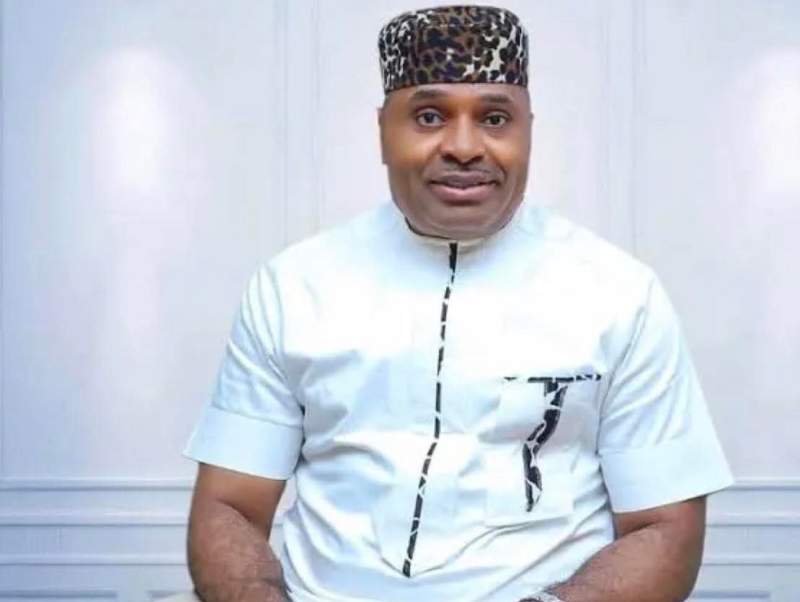
Kenneth Okonkwo, popularly known as Andy, shot into the limelight in the blockbuster 1992 movie Living in Bondage. It was an iconic film and a must-watch in those days, helping to lay the foundation for what later became Nollywood. After a few other movies that did not enjoy the same level of success, he gradually disappeared from public view, only to re-emerge years later on the political scene.

By Chuka Nnabuife

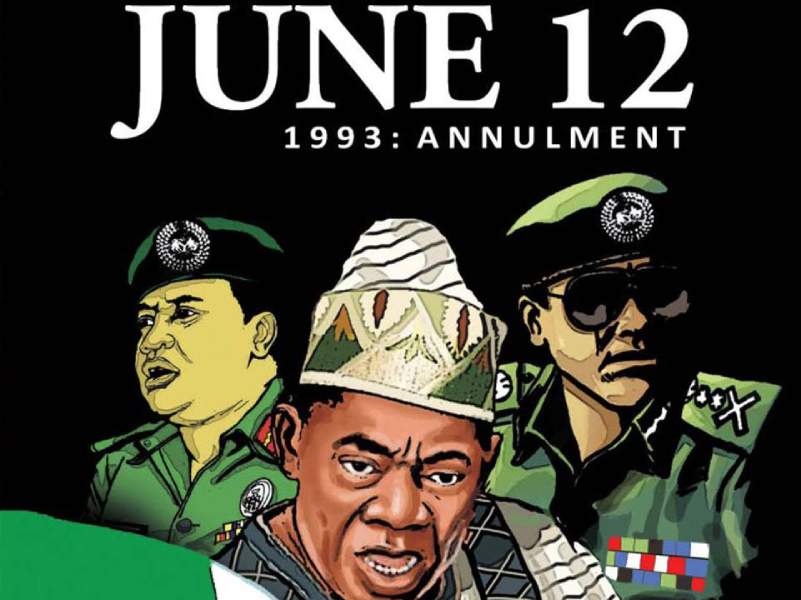
As Nigeria marks Democracy Day, the true purpose of self-rule and governance deserves reflection. Beyond elections and political transitions, what about development, peace, and making communities genuinely livable? How many governments at the local, state, and federal levels truly prioritise these goals?

By Stanley Ojah

I can't sleep any longer. Several apparitive phone calls keep ringing in my ears. I can't sleep, I can't rest, and I can't fathom the depth of the abyss those 'phantoms' are begging me to pull them out of. I am dying to help them live. My eyes see, in darkness, the genuflecting, degenerating hands, outstretched, beckoning, begging, and clutching at nothing for hope and help. It is not my help they keep calling. It is my clothes they won't stop tugging. The name they are calling is a name that is higher than my name and your name.

By Jackson Ekwugum

Just a little over three years ago, traveling from Asaba, the capital of Delta State, to Warri via Ughelli on the Asaba-Ughelli Expressway, was a journey that lasted a minimum of three hours, sometimes stretching to four or more hours depending on the mood of the persistent traffic gridlock at Otovwodo Junction, Ughelli. The 148-kilometre strategic highway, carved into three sectors, was conceived and started by Governor Emmanuel Uduaghan in 2007. It was continued by Uduaghan’s successor, Senator Dr Ifeanyi Okowa. However, as at May 29, 2023, when Rt. Hon. Sheriff Oborevwori assumed office as Governor of Delta State, the road was only about 33% completed, leading to murmurings, complaints, frustration, and hardship among commuters and residents in the state.

In his typical no-nonsense approach to life and governance, Governor Oborevwori got all the contractors back on track and a little over two years into his administration, the road was completed to the astonishment of Deltans and the dismay of his detractors. Today, travelling from Asaba to Ughelli, previously a journey of more than two hours, takes only ninety minutes or less, while travel time to Warri is expected to be significantly shortened once the Otovwodo Junction Flyover is completed.

The story is the same across the three senatorial districts of the state. It has been three amazing years of record-breaking achievements, giant strides in public sector efficiency, and transformational leadership. Gifted with boldness and bulldog tenacity, Governor Oborevwori is an exemplar when it comes to project execution and delivery. In the not-too-distant future, the flagship Trans Warri-Ode Itsekiri Bridges (comprising 15 bridges) and Access Roads, which was previously thought jinxed, will be commissioned. This critical road infrastructure that leads to ten riverine communities was awarded in 2006 by the administration of Governor James Ibori. The Uduaghan administration got it off the drawing board while the Okowa administration approved a re-appraisal of the scope of work after offsetting some inherited contractual liabilities. Driven by his passion to change the development narrative in the riverine areas of the state, Governor Oborevwori took the bold step of clearing all outstanding contractor liabilities and pumped in the resources needed to complete the Trans Warri-Ode Itsekiri Bridges and Access Roads. Today, this mega project stands tall as a testament to Oborevwori’s audacity and strong leadership.

Some cynics speak contemptuously of the governor’s giant infrastructural strides, vainly attempting to diminish it by claiming that governance is beyond building flyover bridges. That certainly is true, and Governor Oborevwori’s phenomenal achievements in the social services sector and human capital development are ample evidences that his administration is more than brick and mortal. His administration has expanded the coverage and reach of the Delta Community Action for Resilience and Economic Stimulus (D-CARES) programme. This is a World Bank–supported social protection and economic recovery initiative being implemented by the state government as part of the Nigeria Community Action for Resilience and Economic Stimulus Programme (NG-CARES).

Under the Oborevwori administration, direct beneficiaries increased from 31,130 that he met on ground to 307,491. This represents an addition of 276,361 beneficiaries and an increase of 887.8% over the initial figure, reflecting a remarkable expansion in programme coverage. The D-CARES programme is executed through the disbursement of cash transfers to poor and vulnerable individuals, the engagement of unemployed youths in labour-intensive public work, disbursement of livelihood grants for household enterprises, supply of agricultural input and asset support to farmers, and the provision of operational support grants to micro and small business owners. In the health sector, Delta State has maintained its leadership position in health insurance with over three million subscribers. Meanwhile, scores of primary and tertiary health institutions have been upgraded and equipped with state-of-the-art health infrastructure.

Having said that, it is obvious that these cynics and mischief makers conveniently gloss over the fact that the many legacy infrastructure projects of this administration are needs-based, not driven by personal ego or the desire to trend by the governor. There is nobody in his right mind who would argue that the three flyover bridges and slip ways in the Warri-Effurun axis are an economic and social necessity. For decades, residents and commuters have suffered untold hardship because of the agonising traffic gridlock on the East-West Road. Today, even before the projects have been completed, we have seen a vast improvement in vehicular movement and a boost in socio-economic activities.

The people are happy and the glory of Warri is being restored, as the Governor promised in his 2023 Inaugural Address. As stated earlier in this article, the Otovwodo Junction Flyover is also an economic and social imperative. The same goes for the Uromi Junction Flyover, which was conceived to stem the incidents of pedestrians being run over by speeding vehicles, as they tried to cross the Lagos-Benin-Asaba Expressway. Governor Oborevwori deserves plaudits for these strategic and essential infrastructure projects, not cheap shots from perennial faultfinders and political jobbers in desperate search for relevance.

In the leadership department, Oborevwori is a model in personal discipline, transparency, and accountability. The worst thing that can happen to an organisation, community, state, or country, is to have a leader who puts politics above everything. The political instincts of such leaders are anchored on expediency and self-preservation. In their world, politics trumps merit or competence. On the contrary, when you have a politician who is a leader, the benefits are immense. Merit is recognised, performance is rewarded, and decisions are based on what is right, instead of what is politically expedient.

Governor Oborevwori is a politician who is also a leader. A straight talker, he is not afraid to take tough but necessary actions no mater whose ox is gored. It is for this singular reason that many government contractors in the state are up and doing. With Oborevwori, they have realised that it is no longer business as usual. You either perform or you are shown the way out no matter how entrenched you may think you are within the system. And woe betide the talebearer who comes to the governor to carry out his or her trade. Before he or she finishes the tale, the governor would place a call to whomever they are ratting on to inform them of the development. That is Oborevwori for you – forthright, transparent, bold, sincere, just, and fair to all.

...Jackson Ekwugum is Manager, Communications, Government House, Asaba. NNL.

SEAROUTE POWER Advert: NO POWER No Problem WE ARE The solution to all YOUR power issues Click/TAP TO CONTACT NOW!!!
No NEPA, No Problem SEAROUTE POWER GOT YOU COVERED - click to contact on WhatsApp