

By Jude Ogechi Eze
Around the sixth century BC and in the centuries that followed, prophets of great repute arose in Israel, proclaiming messages of hope and salvation to a people battered by political upheaval, national dislocation, as well as spiritual decline. Again and again, their prophecies pointed to the coming of a Messiah, the long-awaited Redeemer who would restore what had been broken and usher in a new chapter in Israel's history.
Prophet Isaiah's immortal question remains one of history's most powerful calls to service: “Whom shall I send, and who will go for us?” (Isa. 6:8).
For Christians, that anticipated Messiah found fulfilment in Jesus Christ of Nazareth.
But there is another story in which the language of waiting, redemption and renewal may be employed — metaphorically, of course. It is the story of the University of Nigeria, Nsukka.
Founded on the philosophy of restoring the dignity of man, UNN was never meant to be just another university. It was conceived as an intellectual monument to an independent Nigeria and an emerging Africa; a place where knowledge and innovation would help propel a nation towards greatness.
Then, somewhere along the road, the Lion lost its roar.
By the 1990s, the decline had become increasingly difficult to ignore. Infrastructure deteriorated. Academic standards came under pressure. Institutional confidence appeared to wane. Successive administrations inherited the enormous burden of rescuing an institution whose glory seemed to be slipping away.
UNN was not alone. Nigerian universities generally were confronting the consequences of inadequate funding, infrastructural decay, declining standards and institutional uncertainty. Yet the pain at UNN was different. The University was too important to be regarded as merely another casualty of Nigeria's educational crisis. It was, in many respects, the intellectual child of a nation at independence. And so came the metaphorical Ichabod moment (1 Sam. 4:21); a period when it seemed the glory had finally departed.
The Latin maxim "Optimi corruptio est pessima" (the corruption of the best is the worst) seemed painfully apt. The higher the original aspiration, the more devastating the decline.
Vice-Chancellors came and went. Each brought a vision. Each made contributions. Each confronted the daunting challenge of restoring the dignity of man. But the search for a transformational turning point continued.
For the people of Enugu North Senatorial District, whose ancestral lands provided the foundation upon which the University was built, the matter was even more personal. UNN was not simply an institution located on their soil. It was part of their collective heritage. Its decline was therefore a wound felt beyond the campus gates.
Then came August 2025
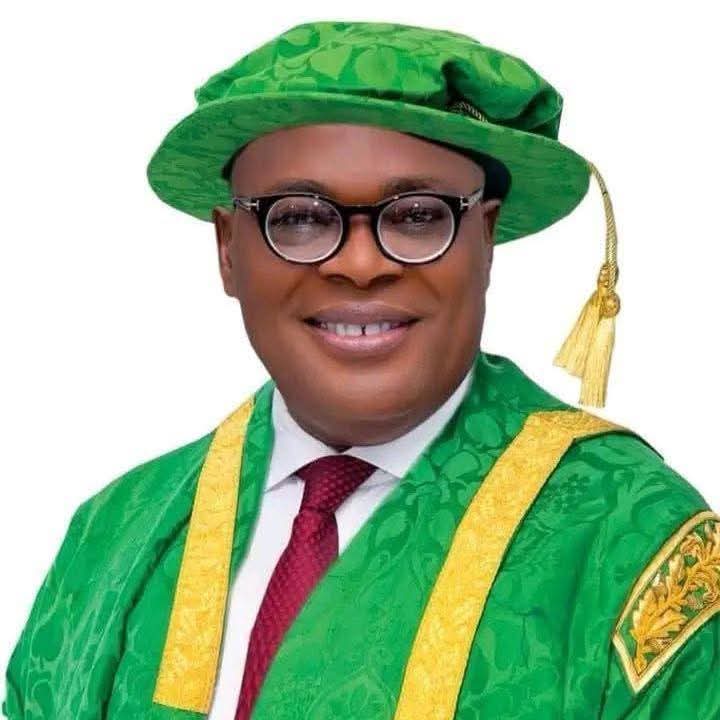
At approximately 5:39 p.m. on August 3, after a keenly contested process, Prof. Simon Uchenna Ortuanya emerged as the successful candidate for the coveted position of Vice-Chancellor. Eight days later, on August 11, 2025, he assumed office as the 16th and first indigenous Vice-Chancellor of this great Citadel.
Something changed. Not because his predecessors were failures. They were not. Every administration contributed something to the survival and development of the University under difficult circumstances. But, the Ortuanya administration appears to have brought a distinctive combination of urgency, breadth and simultaneous execution to the challenge of institutional renewal. And one year later, the signs are difficult to miss.
Across UNN's three principal campuses, long-standing infrastructure concerns are receiving renewed attention.
More than 4.5 kilometres of roads have been rehabilitated. For an institution whose internal roads had become synonymous with neglect, this is more than asphalt and drainage. It is functionality. It is mobility. It is institutional pride.
Five hostels, including Louis Mbanefo Hostel, have undergone rehabilitation, with additional projects expected to commence. The Margaret Ekpo Ref Hall has also received significant attention, presenting a renewed face during the University's recently concluded 55th Convocation.
Then there is the main gate
For years, the gateway into UNN seemed increasingly disconnected from the stature and ambitions of the institution behind it. Its ongoing transformation into a more contemporary, digitally oriented entrance sends a simple but powerful message: the first impression of the University must match the future it seeks.
Staff residential facilities are also being rehabilitated, while major roundabouts and junctions around Nsukka campus, including Sullivan Chime Avenue, Convocation Avenue and Nru Junction Avenue, have received modern aesthetic treatment.
Individually, these projects may appear modest. Together, they tell a bigger story. UNN is being made to look and function like a university again. Perhaps even more symbolic is the rehabilitation of Zik's Flats. For years, the facility stood as a reminder of ageing infrastructure and institutional memory. Under Ortuanya, the project has been awarded, the contractor mobilised and work is ongoing. Its eventual completion will mean more than a renovated building. It will represent an attempt to preserve UNN's heritage while giving that heritage a future.
But universities are not factories for certificates.
They are ecosystems where scholarship, creativity, leadership, physical wellbeing and social development intersect. That explains the administration's effort to reposition UNN as a centre for sports, youth development, health and recreation. This reflects the model of leading universities around the world where athletics and scholarship complement each other.
Another notable innovation is the establishment of the Community Relations Directorate, the first of its kind in the University's history.
Its message is significant. A university cannot thrive in isolation from the communities that host it. For decades, town-and-gown relationships have sometimes been characterised by suspicion, competing interests or inadequate communication. A dedicated structure for community relations signals a deliberate attempt to build bridges rather than walls. Ortuanya meticulously came prepared.
Yet infrastructure and administration ultimately serve one purpose: academic excellence. And here, too, the numbers are striking.
At the just concluded 55th Convocation of the institution, 12,895 graduates received degrees and diplomas. Of these, 10,641 were first-degree and diploma recipients, while 2,944 were postgraduate graduates; including 1,390 PhDs, 1,340 Master's graduates and 214 Postgraduate Diploma recipients. A total of 168 students graduated with First Class honours.
Then came another important development: increased admission quotas following accreditation exercises. The Faculty of Medicine & Surgery reportedly moved from 180 to 400 places, while Dentistry increased from 15 to 60.
These are not merely numbers. They represent opportunities for more young Nigerians to acquire professional education in fields critical to national development.
But they also impose a responsibility on the University: facilities, laboratories, accommodation, teaching capacity and clinical training must grow alongside admission numbers. The current administration is doing justice to that.
Meanwhile, it must be stated that transformation does not happen through projects alone.
Behind every rehabilitated road, renovated hostel, expanded programme and institutional reform is leadership. And leadership also requires partnership.
This is where stakeholders such as Chief Nana Ogbodo, become important; people who believe in the future of UNN under Ortuanya and have offered moral, intellectual, logistical and institutional support to the administration.
The media, too, has a role.
Veteran journalists and publishers such as Reuben Abati, alongside platforms including Blueprint Newspapers and Echo Dei Media Consult, have helped bring visibility to the administration's activities.
UNN needs that visibility, not as propaganda, but as part of the larger national conversation about what Nigerian universities can and should become.
Today, August 11, 2026, Professor Simon Uchenna Ortuanya marks one year in office. One year is too short to declare the complete rebirth of an institution as complex and historic as UNN. But one year is long enough to identify direction. And that direction is what the Ortuanya administration appears to have established.
So, is Ortuanya the Messiah UNN has been waiting for (Matt. 11:3)?
Perhaps the metaphor requires restraint. Ortuanya is not a biblical Messiah. He is a scholar and administrator entrusted with an extraordinarily difficult responsibility. But every generation sometimes produces a leader whom history appears to have prepared for a particular moment. In that institutional sense, Ortuanya may well be answering the question UNN has been asking for decades: “Who will go for us?”
For this generation, the answer appears to be: Professor Simon Uchenna Ortuanya.
Not because his predecessors lacked merit. Not because UNN's problems have suddenly disappeared. And certainly not because one man can rebuild in one year what decades of challenges have weakened.
But, because his first year has demonstrated what the University desperately needed: direction, urgency and purposeful execution. The real test, however, begins now.
If this trajectory continues, the University of Nigeria of tomorrow may look remarkably different from the institution many Nigerians came to associate with decay and decline. Perhaps, then, the most fitting description of the Ortuanya Moment is not that a Messiah has arrived. It is that a new chapter of redemption has begun.
And if today's foundation survives the test of time, history may record August 11, 2025, not simply as the day a new Vice-Chancellor assumed office, but as the moment the Lion of UNN began to find its roar again.
May daylight spare us!
...Jude Ogechi Eze, a laboratory scientist and public affairs Analyst, is the facilitator of Echo Dei Media Consult. NNL.