
Tinubu's Government Must Move From Inflation Management To Aggressive Cost-of-Living Protection
(A NewsLeader Editorial, Monday, October 5, 2026)
There is a point at which economic statistics cease to be statistics and become a daily struggle for survival.
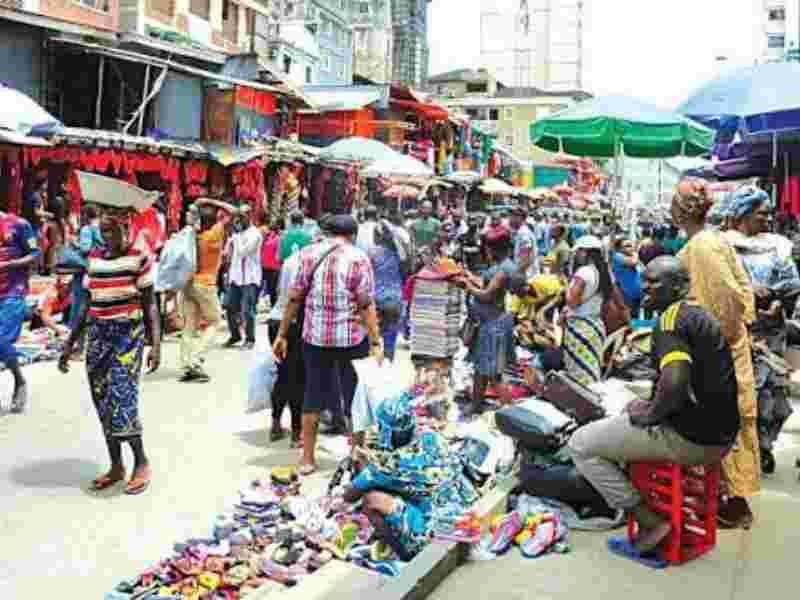
Nigeria may report that the rate at which prices are rising has slowed, but the ordinary Nigerian goes to the market and asks a much simpler question: "why is everything still so expensive?" That question deserves a serious answer from the Federal Government.
For millions of Nigerians, the present economic crisis is no longer simply about inflation. It is about the frightening cost of living that has invaded virtually every aspect of household existence—food, medicine, school fees, rent, transportation, electricity, cooking gas and basic services.
The National Bureau of Statistics (NBS) reported headline inflation of 15.39 per cent in August 2026, down marginally from 15.43 per cent in July. Yet the same report showed that the Consumer Price Index itself continued to rise, meaning that prices were still increasing even though the rate of increase had moderated. Food and non-alcoholic beverages remained the largest contributor to headline inflation, followed by restaurants and accommodation, transport, and housing-related costs. This distinction is crucial.
If the price of a bag of rice, medicine, transport fare or house rent has already risen dramatically, reducing the speed at which it rises does not restore the purchasing power that households have lost. Slower inflation is certainly not the same thing as lower prices. That is the reality confronting Nigeria today. And it is time for President Bola Ahmed Tinubu's government to move beyond the language of macroeconomic reform and confront the increasingly unbearable cost of living with the urgency it deserves.
The greatest danger is that price increases are no longer confined to discretionary goods. Nigerians are paying more for necessities. A family cannot afford the basics. A parent must feed a family and sick person must buy medicine. A worker must travel to work and a student must pay school-related expenses. A tenant must pay rent and a family must buy cooking fuel and electricity. These are not luxuries. They are the basic components of life.
When their prices rise faster than household incomes, the result is not simply economic discomfort. It is declining nutrition, deteriorating health, children being withdrawn from school, increased indebtedness, overcrowded housing and reduced productivity.
The International Monetary Fund (IMF) in its 2026 assessment of Nigeria, acknowledged that conditions remain difficult for many Nigerians and estimated that 63 per cent of the population was living below the national poverty line, while 27 million Nigerians were estimated to have experienced food insecurity in the latter part of 2025. The IMF also warned that higher global fuel, food and fertiliser prices could aggravate inflation, poverty and food insecurity. These are not figures that should merely occupy space in economic reports. They should alarm the government.
There is currently a great paradox of falling inflation. The Tinubu administration deserves recognition for pursuing major economic reforms, including the removal of petrol subsidy and changes to the foreign exchange regime. Those reforms were defended by government and many economists as necessary to address longstanding distortions in the Nigerian economy. But government must also acknowledge the other side of the equation.
The reforms generated enormous adjustment costs for households and businesses. By December 2024, headline inflation had risen substantially from its level at the beginning of the administration, while food inflation had reached particularly high levels. Although inflation has subsequently moderated, the accumulated increase in prices remains embedded in the economy.
This is why Nigerians are not impressed when told that inflation has fallen. A worker who was buying a commodity for N5,000 and now pays N10,000 does not experience relief merely because the price has stopped rising at the previous rate. The price remains N10,000. That is the central political economy problem confronting the government. The Nigerian consumer needs relief in actual prices and real purchasing power, not merely an improvement in statistical indicators.
As the situation is currently, price anarchy must not be confused with normal market pricing. And there is another phenomenon that government must confront. Not every price increase is the result of inflation. Some increases are legitimate consequences of higher production, transportation, energy, importation or financing costs. But not every increase is legitimate either. Where a retailer raises prices because his wholesaler has raised prices, the wholesaler blames the distributor, the distributor blames transport costs and the importer blames the exchange rate, government must investigate the entire chain.
Where the exchange rate improves but prices remain stubbornly high, questions should be asked. Where the cost of a locally produced commodity rises far beyond the increase in its production cost, questions should be asked. Where competitors mysteriously charge almost identical prices, questions should be asked. Where market associations impose arbitrary pricing arrangements or restrict competition, government must intervene. This is not an argument for government to dictate every price in every market. Indeed, blanket price controls can produce shortages, black markets, hoarding and declining investment.
But a free market cannot mean a lawless market. The market must be competitive, transparent and subject to the law. The Federal Competition and Consumer Protection Commission (FCCPC) has already recognised this problem. The Commission has stated that it cannot simply impose prices, but that it can investigate unusual price increases and anti-competitive conduct, including price-fixing, price gouging and cartel behaviour. It has also warned about excessive pricing and alleged price-fixing in parts of the distribution chain. The government must empower this institution to do more.
The Federal Competition and Consumer Protection Commission must be given the resources, independence and political backing required to confront abusive market practices. The FCCPC should become a real consumer watchdog. It should develop a permanent national price-monitoring system covering essential commodities and services. Government should know, in near real time, what Nigerians are paying for: staple food; medicines; cooking gas; transportation; building materials; school-related services; basic household goods; agricultural inputs; rent and housing-related charges. The objective should not be to dictate the price of everything. The objective should be to identify abnormal price movements.
If the price of a commodity rises by 20 per cent while its principal cost inputs rise by only five per cent, the regulator should have the power and capacity to investigate. If several supposedly competing suppliers simultaneously raise prices by the same unusual margin, regulators should investigate. If a cartel is discovered, it should be punished. If hoarding is established, action should follow. If government policy itself is responsible for the price increase, government should correct the policy. This is how a functioning market economy protects consumers.
Food prices, as a matter of fact, must become a national emergency. Food deserves special attention. Food and non-alcoholic beverages remain the largest contributor to Nigeria's inflation basket. That should dictate government priorities. Nigeria cannot solve food inflation by importing its way out of the crisis every year. The country must produce more food, move it efficiently and prevent avoidable losses between farm and market.
The Federal Government should therefore massively expand investment in irrigation, rural roads, storage facilities, agricultural extension, mechanisation, improved seeds, fertiliser access and affordable agricultural credit. But production alone is not enough. Nigeria also has a distribution problem. A farmer may produce tomatoes in one part of the country while consumers hundreds of kilometres away pay exorbitant prices because transportation, storage and middlemen costs have exploded.
Government must build a more efficient agricultural supply chain. Strategic food reserves should also be strengthened and professionally managed. Where there is a severe temporary shortage of a critical staple, government should be able to release reserves into the market to moderate extreme price spikes. This should be transparent, rules-based and protected from political manipulation.
There must be conscious efforts to stop destroying food on the road. It is scandalous that Nigeria can simultaneously complain about food inflation and tolerate enormous post-harvest losses. Food that rots because there are no storage facilities is effectively a lost national income. Food that cannot reach markets because rural roads are impassable contributes to scarcity. Food that becomes prohibitively expensive because transporters must pay enormous fuel and vehicle-maintenance costs ultimately punishes the consumer.
Government therefore needs a national farm-to-market logistics strategy. This should include rural roads, rail freight where economically viable, modern storage facilities, cold-chain infrastructure and efficient wholesale markets. The objective should be simple: produce more. Waste less. Move faster and sell cheaper.
It is a fact that transportation is an inflation multiplier. Transportation deserves special attention because it sits behind the price of almost everything. When transport fares rise, the farmer pays more to move produce. The wholesaler pays more to move goods. The retailer pays more to replenish stock. Workers pay more to commute. Students pay more to travel to school. Ultimately, consumers pay for the entire chain.
Government therefore cannot treat transportation as a peripheral matter. The Federal Government, states and local governments should develop integrated mass-transit systems in major cities. Rail, buses and water transport should be expanded where appropriate. Public transport operators should have access to transparent, targeted interventions that reduce operating costs without creating permanent wasteful subsidies.
The government must also accelerate the development of alternative energy and cheaper transportation systems. A country where moving a bag of food from one state to another is prohibitively expensive will struggle to defeat food inflation.
Also, items of medical necessity like medicine should never become a luxury. The rising cost of healthcare and medicines is another national emergency. A society should never reach the point where citizens must choose between buying food and buying essential medicine.
Government must review the entire pharmaceutical supply chain. Why are essential medicines becoming so expensive? How much is the importer paying? What are the customs and logistics costs? How much is paid to distributors? How much is the retailer adding? Where locally manufactured medicines are competitive and safe, government should support domestic pharmaceutical production through appropriate incentives, financing, infrastructure and regulatory efficiency.
The National Health Insurance Authority and other relevant agencies should also expand effective health insurance coverage so that families do not bear the full cost of illness directly from their pockets. Universal healthcare coverage is not simply a health policy. It is also a cost-of-living policy.
The federal government should also realuse that rent cost has become a national problem. The housing crisis deserves urgent attention now. Across many Nigerian cities, rents have become extraordinarily burdensome for ordinary workers. The problem is not simply that landlords are greedy. Nigeria has a structural housing deficit, expensive building materials, high land costs, inadequate infrastructure, expensive financing and weak rental regulation.
Government therefore needs a national affordable-housing strategy. Federal and state authorities should release serviced land for affordable housing schemes, support mass housing through credible public-private partnerships and develop long-term mortgage and rental-finance mechanisms.
There should also be greater transparency around tenancy practices and arbitrary charges. Renters need protection against unlawful and exploitative practices, while legitimate landlords must be protected from non-paying tenants. The objective should be a functioning rental market, not hostility between landlords and tenants.
For education, it must not price children out of school. Education is another casualty of the cost-of-living crisis. As school fees, transport, uniforms, books, accommodation and other educational expenses rise, poorer families face difficult choices. Government must ensure that public education is adequately funded and that tertiary institutions have sufficient resources to provide quality education without shifting unreasonable costs to families.
At the same time, regulators should monitor excessive and unjustified fee increases in private education. Private schools are businesses and must recover legitimate costs. But parents should not be exposed to arbitrary charges without transparency. A nation that allows poverty to push children out of education is simply transferring today's economic crisis into tomorrow's national crisis.
And very importantly, wages must catch up with real life. Government cannot regulate its way out of inflation. At the heart of the problem is purchasing power. If prices rise while incomes remain stagnant, households become poorer. The new national minimum wage was an important step, but wage policy must be linked to productivity, inflation, fiscal capacity and the actual cost of living.
Government should also create an environment in which private-sector wages can rise through productivity rather than simply through administrative fiat. The answer is a growing economy capable of producing better-paying jobs. That means supporting manufacturing, agriculture, technology, construction, small businesses and export-oriented industries.
The subsidy regime of the government should be targeted, not engage in wasteful subsidies. The debate over subsidies must also become more sophisticated. Nigeria's old subsidy arrangements created enormous fiscal burdens and were vulnerable to abuse. But the alternative cannot be a philosophy that says citizens must simply endure whatever prices the market produces. Government should use targeted, transparent interventions where necessary.
For example, support can be directed towards vulnerable households, public transportation, school feeding, healthcare, agricultural inputs and essential food distribution rather than subsidising consumption indiscriminately. The key is targeting. Government must help those who need help without creating another avenue for corruption.
The exchange rate remains an important component of Nigeria's price structure. Where manufacturers depend heavily on imported raw materials, exchange-rate instability translates into higher production costs. Where medicines, machinery, spare parts and other essential goods are imported, currency movements affect consumers.
Government and the Central Bank must therefore continue pursuing policies that encourage exchange rate stability while building foreign exchange supply through exports, investment and remittances. But government must also confront an important question: if the naira stabilises or strengthens, when will consumers see the benefit? That transmission mechanism matters. A stronger currency that never translates into cheaper imported inputs, lower production costs or reduced consumer prices will not be felt by households.
The Federal Government must resist the temptation to blame every price increase on traders. Traders are also victims of inflation. A retailer who buys goods at a high wholesale price cannot magically sell them cheaply. Government should therefore investigate the entire supply chain. Where traders are guilty of exploitation, prosecute them. Where manufacturers are engaging in anti-competitive practices, investigate them. Where importers are manipulating costs, investigate them. Where distributors are colluding, punish them. Where government taxes, levies, ports, roads, power costs or foreign exchange are driving prices, government must fix those problems. The consumer deserves the truth.
The reality here is that President Tinubu needs a national cost-of-living council. Nigerian NewsLeader Newspaper believes that the President should establish a high-level National Cost-of -Living Council chaired at the highest level and involving the ministries and agencies responsible for finance, agriculture, health, education, housing, transport, trade and investment, labour, the Central Bank, NBS, FCCPC and representatives of states and the private sector.
Its mandate should be measurable. Every quarter, Nigerians should be told: What happened to food prices? What happened to transport costs? What happened to medicine prices? What happened to school costs? What happened to rents? What interventions were introduced? What worked? What failed? What will change? Government must begin measuring its economic success not only by GDP growth, foreign reserves or fiscal balances, but by whether an ordinary Nigerian can afford a decent meal, travel to work, pay rent, educate children and obtain medical treatment. Those are also economic indicators. Perhaps the most important ones.
Mr President must not be afraid of market regulation. There is sometimes an ideological reluctance to use the words “price control”. But there is a distinction between government fixing every price and government preventing price exploitation. Nigeria should not return to a rigid command economy. But neither should it tolerate a situation in which essential commodities become subject to unchecked profiteering, cartels, hoarding or artificial scarcity.
The appropriate model is intelligent regulation. Let legitimate businesses make reasonable profits. Let competition operate. Let entrepreneurs invest. But where the market is distorted, consumers must be protected. Where there is collusion, punish it. Where there is monopoly abuse, intervene. Where supply is artificially restricted, act. Where temporary shortages threaten food security, deploy strategic reserves. Where vulnerable citizens cannot afford essential services, provide targeted support. That is not hostility to the market. It is what responsible government does.
What is important here is that Nigerians need relief they can feel in the face of the current suffocating reform. The Tinubu administration has repeatedly asked Nigerians to endure the pain of economic restructuring for the promise of a stronger economy. That promise must now become more tangible. The government cannot permanently ask citizens to sacrifice today for a better tomorrow while the definition of “tomorrow” continually moves further away.
Nigerians need to see the benefits of reform. They need cheaper food. They need more affordable transport. They need accessible healthcare. They need housing they can afford. They need education that does not bankrupt families. They need jobs whose wages can keep pace with the cost of living. They need a currency and economy capable of supporting purchasing power. And they need protection from those who exploit economic hardship for excessive profit.
The latest NBS figures show that inflation has moderated significantly compared with the extraordinarily high rates recorded in earlier periods. That is important and should not be ignored. But the continuing rise in the general price level and the persistence of high food and living costs mean that the job is far from finished.
The government must therefore resist the temptation to declare victory prematurely. Inflation may be slowing. Nigerians are still hurting. That distinction should guide the next phase of economic policy.
OUR STAND: THE TIME FOR ACTION IS NOW!
In truth, president Tinubu inherited serious economic distortions. His administration has also made difficult reforms that have produced both benefits and significant costs. But governments are ultimately judged by what happens to the people under their watch. The immediate task now is to ensure that macroeconomic stabilisation translates into household relief.
Nigeria needs a coordinated attack on the cost of living. Produce more food. Secure farms. Improve roads. Cut logistics costs. Expand public transportation. Strengthen local manufacturing. Lower barriers to essential imports where necessary. Support domestic pharmaceutical production. Expand health insurance. Build affordable housing. Protect tenants and consumers. Strengthen competition. Break cartels. Punish price-fixing. Improve market information. Build strategic food reserves. Target subsidies intelligently. Raise real purchasing power. And make government agencies accountable for measurable outcomes.
The President should also make one principle unmistakably clear: Economic reform must serve the Nigerian people, Nigerians must not become the fuel for economic reform. The ultimate objective of reform is not to produce impressive figures on government spreadsheets. It is to create an economy in which families can live with dignity.
Nigeria cannot continue along a path where salaries rise on paper but disappear at the market; where inflation falls statistically while prices remain painfully high; where food is produced but cannot be transported affordably; where medicines exist but are beyond the reach of the sick; where houses are built but remain unaffordable; and where education becomes a privilege reserved for families with deep pockets. That is not sustainable. The Federal Government must act now. Not tomorrow!
The Tinubu administration must regulate where regulation is necessary, compete where competition is required, subsidise where vulnerable citizens need protection, invest where supply constraints drive prices, prosecute where collusion occurs and remove the structural bottlenecks that make almost everything in Nigeria more expensive than it should be.
The country does not need a return to indiscriminate price fixing. It needs something more intelligent and more urgent: an economy in which no Nigerian is left at the mercy of price anarchy.
The government must restore the most basic promise of economic governance—that hard work should provide a decent life. Until that happens, the statistics may improve, but the national pain will remain. Nigeria cannot build a prosperous nation on empty pockets and hungry households. NNL.