
(A NewsLeader Sunday Editorial, October 11, 2026)
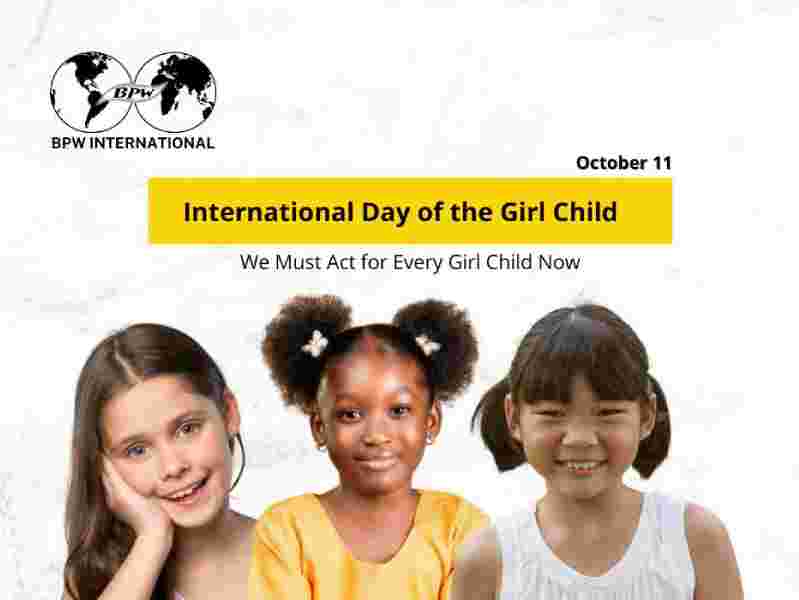
Today, Sunday, October 11, 2026, marks the 2026 edition of the International Day of the Girl-Child.
It is an occasion dedicated to celebrating girls, amplifying their voices and drawing attention to the discrimination, abuse and deprivation that continue to undermine their development.
This year's theme, “End Child Marriage and Invest in Girls’ Rights!”, is both a celebration of the girl child and a compelling demand for action from governments, families, communities and development partners.
Ending child marriage and investing in girls’ rights is not an act of charity; it is a moral obligation, a human-rights imperative and an investment in Africa’s future. The message could hardly be more urgent.
Across Africa, millions of girls still struggle to enjoy the simple privileges that should accompany childhood, among which are access to education, adequate nutrition, healthcare, personal safety, freedom from violence and the opportunity to determine their own futures. For many, the promise of childhood is interrupted by early marriage, teenage pregnancy, poverty, harmful traditional practices, insecurity and discrimination. Others are denied schooling because their families consider educating boys more worthwhile than investing in their daughters.
Nigeria, Africa's most populous country, must confront these realities with renewed determination. The International Day of the Girl Child must not become another annual ceremony of speeches, slogans and promises that disappear when the celebrations end. It must become a turning point for policies, investments and community action that measurably improve the lives of girls.
The question is not whether girls deserve protection and opportunity. Of course, they unquestionably do. The question is whether our governments and societies are prepared to translate that recognition into practical action. This year's theme has a bit of urgency behind it.
The United Nations established the International Day of the Girl Child in 2011, with October 11 subsequently becoming an annual occasion to promote girls' rights and address the particular challenges they face.
The 2026 theme places child marriage at the centre of the global discussion while demanding broader investment in girls' rights. Its significance lies in recognising that child marriage is not an isolated cultural practice. It is closely connected to poverty, unequal access to education, gender discrimination, insecurity and weak enforcement of protective laws.
According to the United Nations Children and Education Fund (UNICEF), approximately 650 million women and girls alive today were married before their 18th birthday. More than 12 million girls enter marriage before adulthood every year. Sub-Saharan Africa remains one of the regions most seriously affected, and with the prevalence of child marriage estimated at around 31 per cent in the United Nations' 2026 observance materials. These figures represent far more than the statistics. Behind them are girls whose education may be terminated, and whose childhood freedom is curtailed and whose physical and emotional development may be compromised by responsibilities for which they are not prepared.
Child marriage can expose girls to early pregnancy and its associated health risks, domestic violence, social isolation and economic dependence. It can also reinforce a cycle in which girls who leave school early have fewer opportunities to secure decent employment, earn independent incomes and make informed decisions about their lives.
The consequences extend beyond individual families. Communities lose potential teachers, doctors, scientists, entrepreneurs, public servants and political leaders when girls are denied opportunities to develop their abilities.
The 2026 theme therefore demands two complementary commitments, which are to end the harmful practice of child marriage and making sustained investments in girls' education, healthcare, protection, economic opportunities and participation in decision-making. Neither objective can be achieved in isolation. A girl cannot fully exercise her rights if she is protected from early marriage but denied schooling. Equally, education alone cannot guarantee her future if she faces sexual violence, discrimination or forced marriage. The task, therefore, is to build a society in which girls are protected, educated, respected and empowered to shape their own destinies.
On the continent of Africa, the Africa's girl child is evidently making progress amid persistent injustice. Africa, ironically, presents a complex picture of progress and continuing deprivation. Girls on the continent are excelling in classrooms, universities, science, business, sports, public administration and community leadership. They are challenging stereotypes, creating businesses, using technology to solve problems and demonstrating that ability and ambition are not determined by gender.
Many African governments have adopted laws and policies intended to improve girls' access to education, prevent gender-based violence and reduce harmful practices. Community organisations, women's groups, traditional leaders and international development agencies have also contributed to changing attitudes and supporting vulnerable girls. Yet the pace of progress remains inadequate.
UNICEF's regional information indicates that approximately 41 per cent of girls in West and Central Africa marry before the age of 18. The region includes six of the world's ten countries with the highest child-marriage prevalence. Although circumstances differ considerably between countries and communities, the scale of the problem demands urgent attention. The educational picture is equally concerning.
UNICEF reports that lower-secondary completion among girls in sub-Saharan Africa remains particularly low, at approximately 37 per cent in its reported regional comparisons. Population growth, poverty, conflict and inadequate educational infrastructure continue to complicate efforts to ensure that every girl completes her schooling.
In some communities, families struggling with extreme poverty regard early marriage as a way to reduce household expenses or obtain immediate financial support. In others, tradition, insecurity and concerns about premarital pregnancy influence decisions to marry daughters early. Such explanations help illuminate the pressures families face, but they cannot justify depriving children of their rights. Poverty must be addressed through social protection, livelihood opportunities and accessible public services, not by sacrificing a girl's future.
Conflict and displacement create additional dangers to future of the girl child. Where schools close, families flee their homes or livelihoods collapse, girls may become more vulnerable to exploitation, trafficking, sexual violence and forced marriage. Climate-related disasters and food insecurity can deepen these risks. Female genital mutilation, child labour, sexual abuse and discriminatory expectations about domestic responsibilities also continue to affect girls in parts of the continent.
These practices vary across countries and communities, and they should not be treated as universal African characteristics. They are, however, serious challenges wherever they occur. Africa must, therefore, reject the false choice between cultural identity and children's rights. Traditions that promote solidarity, responsibility and community welfare deserve preservation. Practices that expose children to harm or deny them education and autonomy must be questioned and changed.
Traditional institutions can play a decisive role in this transformation by using their authority to protect girls, promote schooling and mobilise communities against harmful practices. The continent's future will depend partly on whether it can turn its youthful population into an educated, healthy and productive generation. Neglecting girls means wasting a substantial part of that human potential.
In this circumstance, therefore, the agenda for Nigeria is to confront it's own responsibility. For Nigeria, this year's observance of the girl child day should be an occasion for serious national reflection.
The country has millions of girls whose dreams are threatened by poverty, educational exclusion, insecurity, child marriage and inadequate access to healthcare. The consequences are particularly severe for children in poor households, remote rural communities, conflict-affected areas and families displaced by violence. Although the scale and nature of these problems vary across Nigeria's geopolitical zones, no region should consider the protection of the girl child somebody else's responsibility.
In communities where girls are withdrawn from school to assist with domestic work, the immediate needs of the household often take precedence over their long-term development. In other circumstances, parents may struggle with school fees, transport costs, uniforms, sanitary products and other expenses that make continued education difficult.
Security concerns create further obstacles. Where attacks, threats or abductions disrupt schooling, parents may be reluctant to send their daughters to school. Such fears require credible security measures, safe learning environments and effective protection for vulnerable communities.
The federal and state governments must therefore move beyond general declarations of support for girls' education and identify the barriers that prevent girls from entering school, remaining in school and completing their education. Free and compulsory basic education must be made meaningful through adequately funded schools, qualified teachers, safe classrooms, learning materials, accessible sanitation facilities and effective measures to prevent sexual harassment and abuse.
For poorer households, scholarships, school-feeding programmes, cash transfers and other targeted support can help reduce the financial pressures that lead to absenteeism, withdrawal from school or early marriage.
Special attention should be given to girls who have already dropped out. Flexible learning programmes, second-chance education, vocational training and reintegration initiatives can help them recover opportunities that would otherwise be lost.
A girl who becomes pregnant or marries early should not automatically be condemned to permanent educational exclusion. Appropriate safeguards, counselling and reintegration policies can help young mothers continue learning while protecting their children's welfare. The objective must be to prevent early marriage while ensuring that girls already affected by it are not abandoned.
Besides, there must exist, laws that protect the girl child in practice. One of the central contradictions in the struggle for girls' rights is the gap between legal commitments and their implementation. Nigeria has enacted legislation relevant to children's protection, including the Child Rights Act of 2003. However, the Act's implementation and domestication have historically varied across states, while questions surrounding age, customary practices and the interaction of different legal frameworks require careful attention.
The federal and state governments and the legislatures must ensure that applicable laws provide clear, consistent and effective protection against child marriage, exploitation, trafficking and sexual violence.
States that have yet to establish adequate protections must address the gaps in their legal frameworks. And also states with relevant laws must ensure that those laws are enforced fairly and consistently. Law enforcement agencies should investigate reported cases of abuse promptly, protect victims from intimidation and ensure that perpetrators are held accountable through due process.
Courts, social welfare agencies and child-protection institutions must be adequately resourced to respond to cases involving vulnerable children. Confidential reporting channels and accessible legal assistance are also necessary. But legislation alone will not end child marriage. Where families depend on early marriage because of poverty, legal enforcement must be accompanied by economic assistance, education and community engagement.
Government should also collect reliable, disaggregated data on school attendance, child marriage, adolescent pregnancy, sexual violence and access to support services. Without dependable evidence, policymakers cannot identify the communities most at risk or determine whether interventions are working. This year 2026 theme calls for investment, and which must include adequate budgetary allocations, transparent expenditure and measurable results.
In fighting for the protection of the rights of the girl child, parents and families must be the first line of her protection. The family is a child's first environment of learning, protection and emotional development. Parents and guardians therefore have a special responsibility to ensure that their daughters are valued as individuals with abilities, aspirations and rights. A girl's worth must never be measured by the bride price her marriage might attract, the domestic work she can perform or her capacity to produce children.
Parents should encourage daughters to study, ask questions, express their views and pursue careers that match their interests and abilities. They should provide boys and girls with equal encouragement and avoid imposing domestic responsibilities that routinely prevent daughters from attending school or completing assignments. Also,
families must create environments in which girls can discuss harassment, abuse, bodily safety and other difficult issues without fear of shame or punishment.
Where economic hardship threatens a daughter's education, parents should seek available scholarships, community assistance and government support rather than treating early marriage as the inevitable solution. Religious leaders, traditional rulers and community elders must reinforce this message. Their influence can help families recognise that protecting a girl's childhood is compatible with cultural values of responsibility, compassion and community welfare. The ultimate test of family responsibility is whether parents equip their daughters to live safely, make informed choices and contribute meaningfully to society.
Schools must play significant roles in the development and growth of the girl child. They must become safe places for every girl.
Education is among the most effective means of expanding a girl's choices, but access to a classroom is only the beginning.
Schools must provide safe and inclusive environments in which girls can learn without sexual harassment, bullying, discrimination or fear of violence. Teachers and school administrators should receive training on safeguarding, gender-sensitive teaching and the appropriate handling of disclosures of abuse.
Schools need confidential reporting mechanisms, clear disciplinary procedures and referral systems linking affected children to medical, psychological and legal support.
Governments should improve access to clean toilets, water and menstrual-health facilities. Girls should not be made to miss school because they lack sanitary products or cannot manage menstruation safely and with dignity. Science, technology, engineering and mathematics education should be actively promoted among girls, alongside vocational, entrepreneurial and digital skills.
Career guidance and mentoring can help girls discover opportunities beyond occupations traditionally associated with women. Equally important is the need to retain qualified female teachers and encourage women to occupy leadership positions in educational institutions. Girls benefit from seeing women who demonstrate that academic achievement and professional leadership are attainable.
Schools should work with parents to identify children at risk of dropping out and intervene before temporary absence becomes permanent exclusion. Every girl deserves not merely admission to school, but the opportunity to learn, complete her education and use her knowledge productively.
In the collective efforts to reposition and develop the girl child towards self-actualization, the media, civil society and the private sector must come in. The media, for instance, has an important responsibility to shape public understanding of the girl child's rights and challenges. Newspapers, radio, television and digital platforms should investigate the conditions that expose girls to early marriage, educational exclusion and violence. They should also report on government performance, examine budget commitments and give girls opportunities to speak about issues affecting them.
Coverage must protect the identities and dignity of child victims. Sensational reporting that exposes survivors to ridicule or stigma can compound their suffering. Journalists has a responsibility to also tell stories of achievement, resilience and successful interventions. Reporting on girls who have overcome barriers can inspire communities while demonstrating what effective support can accomplish.
Civil society organisations, professional associations, women's groups and youth-led movements should strengthen advocacy, provide support services and monitor government commitments. They can help vulnerable families access educational assistance, document abuses, offer counselling and connect survivors with appropriate protection services. The private sector also has a role. Businesses can provide scholarships, apprenticeships, digital-skills training, mentorship and employment pathways. Corporate social-responsibility programmes should be designed around demonstrable needs rather than publicity alone.
Technology companies and telecommunications operators can support digital literacy and safer online spaces while helping girls develop skills for the modern economy. Development partners should coordinate their interventions with local institutions and support sustainable programmes that can continue beyond individual funding cycles. Most importantly, girls themselves must be included in decisions about the programmes intended to serve them. Their experiences can reveal barriers that policymakers and adults may overlook. Participation must be meaningful, safe and age-appropriate. Girls should not be treated merely as beneficiaries of policy but as active contributors to their communities' development.
The economic argument for girls' rights is compelling, but it should not overshadow the fundamental truth that every girl possesses inherent dignity and rights regardless of her future economic contribution. Nevertheless, societies benefit enormously when girls receive quality education, healthcare and protection. Educated girls are better positioned to access employment, develop businesses, understand health information and participate in public life. When women have greater economic opportunities, they can contribute to household welfare and national productivity.
Investment in girls can also help break intergenerational cycles of poverty. Children raised in households with improved access to education, healthcare and economic resources are more likely to benefit from better opportunities themselves. Conversely, excluding girls from education and productive activity imposes costs on families, communities and national economies. Governments should therefore view expenditure on girls' education, healthcare, nutrition and protection as a strategic investment in national development, not a discretionary social expense to be reduced whenever public finances become difficult.
The same principle applies to health services. Girls need access to age-appropriate information, preventive healthcare, mental-health support and confidential assistance when they experience violence or exploitation.
Pregnant adolescents and young mothers require respectful medical care, counselling and opportunities to continue their education. No child should be left to face a health crisis or an abusive situation because her family fears social embarrassment.
The International Day of the Girl Child must be more than an annual reminder of problems that everyone already knows exist.
Governments should use the occasion to announce measurable targets, publish implementation plans and commit resources to programmes that protect girls. State governments should identify girls who are out of school, establish effective pathways for their return and publish regular progress reports. Child-protection agencies should strengthen reporting and response systems. Legislatures should examine whether existing laws adequately protect children and whether the necessary funding is available.
Communities should monitor school attendance, challenge harmful practices and support families facing economic hardship.
News organisations should sustain attention on the issue beyond October 11, examining progress and failures throughout the year.
These commitments should be translated into practical indicators such as more girls enrolled and completing school, fewer child marriages, safer learning environments, improved access to healthcare and stronger responses to reported abuse. International partners must also sustain support for effective programmes, particularly in communities affected by conflict, displacement and severe poverty.
The United Nations has reported that investments in education, legal reform and social protection helped avert an estimated 68 million child marriages over the past 25 years. This demonstrates that progress is possible when governments and communities act consistently. But progress must accelerate. No society should accept a future in which generations of girls continue to lose their childhoods because effective solutions were not implemented at the necessary scale.
NIGERIAN NEWSLEADER'S EXHORTATION
As the world celebrates the International Day of the Girl Child today, NIGERIAN NEWSLEADER Newspaper calls on governments, parents, schools, religious institutions, traditional rulers, the media, civil society and the private sector to treat the 2026 theme as a binding moral challenge.
End child marriage and keep the girls in school. Protect them from violence. Invest in their health and respect their voices, and give them the opportunity to lead. Nigeria and Africa cannot afford to squander the potential of millions of girls through preventable discrimination, neglect and harmful practices.
A girl should not have to choose between education and marriage before she is ready. She should not be denied schooling because she is female, exposed to violence because she is vulnerable or prevented from pursuing her ambitions because of poverty. Her childhood must be protected, just as her education must be supported. Her rights must be respected and her future must not be decided for her by prejudice or economic desperation.
The measure of our commitment will not be the number of speeches delivered today, but the number of girls who remain in school tomorrow, the children protected from forced marriage, the survivors who receive justice and the opportunities opened to young women who might otherwise have been left behind. This is the responsibility of government, but it is also the responsibility of every family and every community.
Let the girl child be encouraged and supported to dream dreams without fear. She should learn without discrimination and grow without violence and rise without artificial barriers. Her future is her right, and protecting that right is an investment in the future of us all. NNL.