
By Celestine Okafor (Editor-in-Chief)
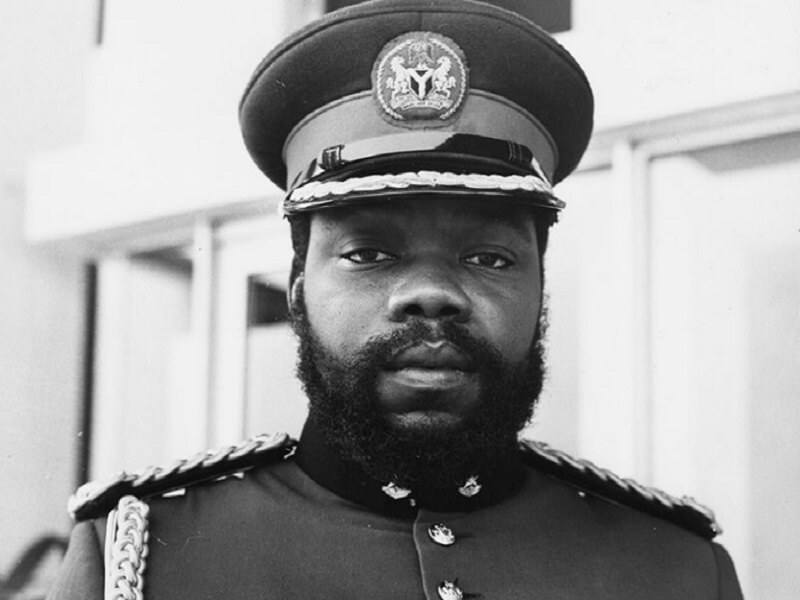
The life and times of the former leader of the defunct Republic of Biafra, late Dim Christopher Chukwuemeka Odumegwu Ojukwu, the Ikemba Nnewi, and the Eze Igbo Gburu Gburu, was characterized essentially by intense drama, suspense, strife, tension, and fun, as well. From infant to youth, and adulthood, and old age, the leader of Ndigbo was controversial and for the right reasons, even in death.
The unfortunate bloody event of the Nigerian-Biafra civil war occurred between July 6, 1967 (following the formal declaration of the Republic of Biafra by Ojukwu, the then military governor of old Eastern Region of Nigeria) and January 17, 1970, when the war ended on a note of "no victor, no vanquish", however, brought out what later became the Emeka Odumegwu Ojukwu myth and persona. At various times, the late elder statesman was blamed for the massacre of millions of Igbo-speaking South Eastern Nigerians during the three years fratricidal war.
According to the late Dim Emeka Odumegwu Ojukwu, his then opponents and some sections of the media led largely by the Nigerian and British Press described him as a "rebel" and in some cases, portrayed him rather derogatorily as an ambitious bloodthirsty "warlord". Ojukwu also told his NIGERIAN NEWS-LEADER interviewer/Editor-in-Chief, that the greatest campaign of "falsehood" against him occurred during his agonizing years of solitary self-exile in Ivory Coast, a French-speaking West African country presently known as Côte d'Ivoire.
To Ojukwu, the various post-civil war book accounts by most of his then military colleagues and "enemies" alike, about his role and actions during the war, were an apocryphal portrayal of the former Biafran leader as an arrogant, a traitor, or an ambitious power monger, who cared less about the lives and safety of his people. Ojukwu believed that his "enemies" inside Nigeria as his British-born Biographer and Journalist, Fredrick MacCarthy Forsyth once wrote, hate him with passion. "They (enemies) fear him, even though he had uttered no threat against them. They fear his honesty against their own greed and corruption; they fear his courage against their own cowardice; they fear his intelligence against their own foolishness.
"But these are not the real reasons. The true reason concerns respect. They fear the respect that is stillborn towards him despite an absence (his exile) that would have destroyed a lesser man. In Nigeria, where for many years, the people have despaired for finding a man they could respect, despite vigorous censorship imposed by the then military Generals, the name of Emeka (Ojukwu) ran like a rumbling current beneath their feet. The fact that millions might recognize in Ojukwu, a man who respected them as a people and who they could respect in return, frightened that handful of men who know they could never have the people's respect, because of what they have done", wrote Fredrick Forsyth.
In some of Ojukwu's media interviews, the late Igbo leader had tried to preach the gospel of reconciliation and genuine integration, rather than an attempt to impugn the alleged "deliberate falsehood" and wrong impression created about him in the numerous book accounts of the civil war. Ojukwu had, in a response to a question, on whether there could be a possibility of another secession in Nigeria, said that: "What happened in May 1967 (civil war) should always be seen in its context. We (the Easterners) did what we did then (during the war) in response to a whole series of terrible experiences and opposition to a specific regime that had either helped those terrible experiences come about or condoned them afterward.
"Since then (after the civil war) my people in the East have not been subjected to further massacre, or destruction of their property (in such magnitude), so the question of a reaction like that of 1967 does not arise. One should not forget that the war of 1967-1970 taught everyone, even the victors, a lesson, which is, that you cannot treat a people, even an ethnic minority, that way. If you do, they will fight, because they have no choice but to fight. I believe that if we on the Biafran side learned things to our cost in that war, so did all Nigerians. Chief among these, l believe, is that we earned the respect even of those who fought us. That is important in this world, but most of all in Africa, to have respect and self-respect. We fought for it; in our people's suffering, we earned it. That is why l do not think we shall be subjected to those things ever again".
But why on earth did Ojukwu, a major protagonist in the Nigerian-Biafran war story, not publish a comprehensive version of his "authentic account" of what happened during that war and his role? The former Biafran leader told this journalist at his then Isi-Uzo street residence in Independence Layout Enugu, that his war story would be available to the world "not in my lifetime". During the three and a half hour grueling interview which lasted into midnight and graced by his visitors, some eminent Igbo leaders (Chief Chekwas Okorie, late Dr. Joe Nwodo, and his sibling, Chief John Nnia Nwodo, a former Minister of Information and immediate past President-General of Ohaneze Ndigbo, as well as Professor Anika of the University of Nigeria Nsukka, UNN), Ojukwu almost came to tears while talking about his unpublished memoir of the civil war and the experiences of the Easterners, from his own perspective, during that war.
The Ojukwu encounter with the NIGERIAN NEWS-LEADER Editor-in-Chief, Celestine Okafor, went thus:
JOURNALIST: Why have you not published your own account of the civil war being a central character in that event? Of course, you are aware, Eze Igbo, that virtually all the actors in that war, including those who had operated on the periphery, have published their wartime books except the Ikemba.
OJUKWU: (long pause) Is it an order?
JOURNALIST: No, it is a suggestion rather, just a simple question!
OJUKWU: Oh oo! I am not going to dignify falsehood and fiction and those who make it their business. I have read all of them (the various war books), and l said so what? Envy and greed are part of this life. Hunger and survival are also part of it, just like the fear of being alienated. Historically, real heroes hardly tell their story, at least not in their lifetime. My civil war story is almost ready to be told to simply answer your question, but the consequences are my primary concern.
JOURNALIST: What consequences? Can you be more specific here, Eze Igbo Gburu Gburu?
OJUKWU: The raw truth contained in that memoir will give some people horror and nightmare. I have led a revolt against injustice in this country, but the true story of that revolt might also lead to further revolts and national calamity when the book is published. But l pray it doesn't, at least, not in my lifetime. Some persons are still uncomfortable about the name Chukwuemeka Odumegwu-Ojukwu. I want them to still enjoy their relative peace!
JOURNALIST: In whose custody is the book or its manuscript?
OJUKWU: I say SHUT UP! You ask too many questions, Mr young Journalist. I am not going to tell you. And neither would l trust you enough to keep it (book manuscript) for me. (General laughter). NNL.