

Follow News Leader on Twitter Like our FB page
By Celestine Okafor (Publisher/Editor-in-Chief)
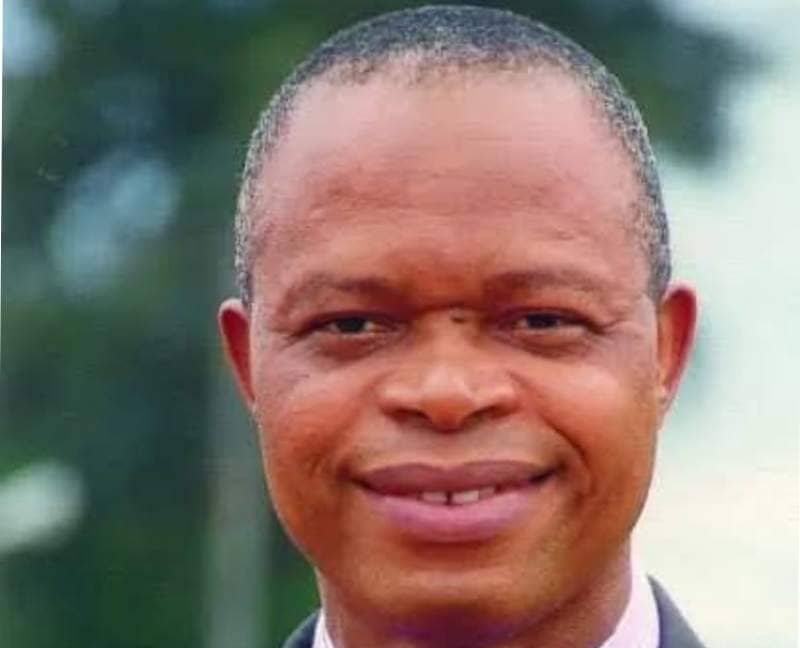
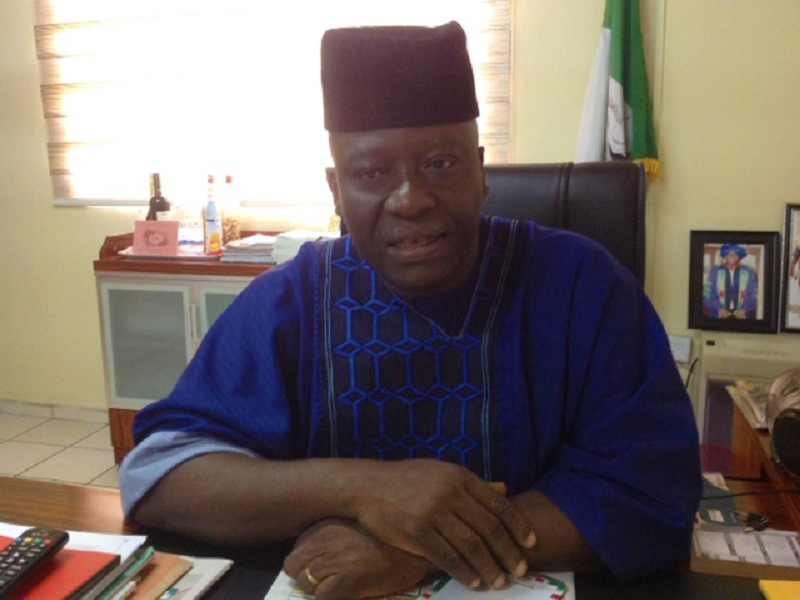
Acting Director General of the National Broadcasting Commission (NBC), Professor Amstrong Aduku Idachaba, is presently on the public spot for wielding the big stick against broadcast stations which his Commission found to be on the wrong side of the NBC's regulatory code. Idachaba, a professor of Mass Communication, University teacher, a former Director of Monitoring and Broadcast Policy and Research in the Commission, was appointed Chief Executive Officer of the NBC in February 2020. In this exclusive interview with the Publisher/Editor-in-Chief of NIGERIAN NEWSLEADER Newspapers, CELESTINE OKAFOR, on Friday in his office at the Commission's Abuja headquarters, Professor Idachaba made interesting revelations about the NBC and the broadcasting operators in Nigeria. Excerpts:
Your were the Director of Monitoring of the National Broadcasting Commission (NBC) before you recently assumed duty as Acting Director-General of the Commission. What have been your experiences so far in both positions?
Thank you Celestine, for raising this! I never really thought about a juxtaposition or the analysis of the shifting roles and how they impact on the organization. But it's good you raised it. May be my background (as a Professor of Mass Communication) has helped in diverse ways. I think that being a Director of Monitoring and as also working as a Zonal Director of the Commission, actually gave me a panoramic understanding of the operations of the NBC in terms of its regulatory functions. As a Zonal Director, l was directly supervising broadcasting activities in as many as five or six states of the country that constitute a zone. But as Director of Monitoring, l was responsible for coordinating the activities of about ten zonal Directors and the eighteen state officers that spread across Nigeria with regards to the day to day functioning of broadcasting in their respective zones. At that level, one is more able to have a wholistic picture of the industry, from the North, South, East and West. One is also able to shift to analyze and visualize and see what peculiarities that exist in the different locations of the country. Interestingly, some of them are ethno-cultural, some are economic and some are social. But there are also other broadcasting issues that assume national impact and proportion. So the Directorate of Monitoring of the NBC actually gave me a wholistic picture of the totality of the engagements in the broadcasting industry in Nigeria. That was the background from which God elevated me to become the Acting Director General of the NBC. What l see is unique, in the sense that as Director General, l now have to bother about the impact of broadcasting or the regulatory components of the Commission, but l also have to, much more, begin to interrogate policy issues, mostly the role of government or the role of the NBC in the distinct functionality of the other functions like advising the federal government on Mass Communication policies, promoting industry standards and audience measurement, trans-border broadcast issues, laws regarding broadcasting, inter-agency cooperation and even emerging national threats. So you can see that l have a policy dissecting role already cut out for me as Director General. That can be really challenging.
In specific terms, can you tell us more about those challenges and your goals as Director General of the NBC?
For me, the challenge basically is working towards meeting the objectives and the mandate of the Commission. Like l said, the mandates are several, and it is a task to ensure that as a regulator or the body that l head, l am able to attain those mandates. For instance, how do you make broadcasting to promote social harmony in Nigeria? How do you get broadcasting to promote economic viability? How do you use broadcasting to promote the technological vision of the Nigerian society? How do you use broadcasting to build inter-regional and inter-ethnic social cohesion in a way that the country can be united and focused and pursue development as an entity? And of course, ancillary to that, is how do you get your own Commission to be professional? How do you get the staff to be adequately equipped to do the job that they're supposed to do? What levels of exposure are you able to give them in terms of developing their intellectual and knowledge base and be able to appropriate their capacity in the work that they do? Also, your clients, very important, the broadcasters, how do you navigate in a way that they remain sustainable and relevant in their own mandate as well, separately and wholistically.
Opinions are divided on the appropriateness of your recent sanctions against the three broadcast TV stations that your Commission frowned at their reportage of the EndSars protests. This is not actually the first time the Commission is slamming such punitive order against perceived erring broadcasting firms. Even when you were Head of the Monitoring Directorate of the NBC, there have been similar sanctions, but it always appear like a slap on the wrist or such sanctions frozen, especially once BON members step in or an influential member of the society intervenes. As DG, have you ever been under some kind of pressure from within or without, to pull back, when you lift the hammer?
I want to thank you again for raising this issue. I'm glad also that you said opinions are divided. I'm sure some people would want to think that their views are the dominant view. As Director General, l get encouraged when sound and knowledgeable professionals like you identify and actually understand why it is important that there are sanctions. The NBC is not a sanction-seeking agency of the federal government of Nigeria. We are not interested in a witch-hunt of any broadcast organization. We have an objective to promote broadcasters and broadcasting in Nigeria. We want to see them survive. We want to see them vibrant. And we are also interested in seeing them very responsible and very professional. And you are right when you said that when they commit these infractions and punishments are meted to them, it apparently looks like a slap on the wrist. But again, it is disturbing when the people who violate the code actually go out to shout and create the impression, and to some extent, even blackmail the regulator (the National Broadcasting Commission, NBC) and accuse the regulator of trying to suffocate them or try to disallow them from expressing their right to the Constitutional freedom of expression. But as we are beginning to see increasingly, and as we have said in recent time, what is obvious is that there have been some infractions. I will expect the broadcast organizations and informed industry analysts like you to represent the issues with the fact of the matter. That fact of the matter being that breaches and infractions have been created. And some of these breaches are breaches that are capable of leading to breakdown of law and order in the society. You know, speeches, unprofessional conducts that are misleading in a sense that it can lead to inflammatory actions like we saw during the ENDSARS protests. The level of violence that were shown on television, the kind of commentaries, many of them largely unsubstantiated and misleading, kind of aided and aggravated the responses and the mob culture and reactions that we saw in many of the protest occasions. Now, what is ideal in that kind of situation is to simply shutdown the TV or radio station by the NBC. But the Commission avoided the temptation of doing that. I will give you an analogy. If you have a hospital, which, rather than treat patients, leave the patients further maimed, dying or leave them with further injuries, will any responsible officer of government regulating that hospital allow such hospital to continue to function? Another analogy! If you have a food producing company that rather than manufacture quality and standard food products, was busy producing consumable items that cause cancer and compromise the health of the citizens, as a regulator like NAFDAC in this circumstance, will you sit down and say such company has a right under the law to exist or to operate and kill more people? So, if the broadcasting stations, by their misconducts, become gas chambers with the possibility of killing citizens and cause a total breakdown of law and order in a society, the responsible thing for any regulator or government to do is to take them off. And let me make the point to you as a Journalist. The issue of inflammatory comments or promotion of societal violence are not issues of freedom of speech or expression. They are issues of national security. And many people do forget that in the absence of the regulator like the NBC, security agencies are well able to handle such situations. But it is much more civilized if the broadcasters will listen to their regulator and follow what their own professional ethics are, so that they don't indirectly invite the hammer in terms of extra-judicial involvement of other players of government. So, the position of the NBC basically is that we expect the broadcasters to follow the noble cause of abiding by their professional code of practice. Maybe because of the pressure of work, they negate to observe the provisions of the broadcast code and they are reminded by the regulator as we often do, through caution and a warning, the main reasonable thing for them to do, is to obey for the safety and integrity of their business and for the unity and cohesion of the country.
Amidst the sanctions you have imposed on the three broadcast TV stations, you have equally threatened to raise the penalty fines if there are further breaches of the operational code. But the BON (Broadcasting Organization of Nigeria) has accused your Commission of perverting due process in unleashing the punishment. Also, some NGO bodies like SERAP and DRLI have actually gone to court to challenge your action, never mind that some of them may have been clearly partisan and have also been accusing the NBC of docility in the face of all the infractions. Are they right or wrong? And what other stringent measures is the NBC coming out with to ensure moderation in the broadcasting activities or engagements?
I am appreciative that you raised the issues of groups, NGOs complaining and saying they're going to court. Of course, it is the right of every citizen to go to court. That is why the regulator like the NBC has to be very professional without tilting to emotions because the mandate of the Commission was very clear on matters like this. Part of that mandate is to focus on promoting the ideals of the profession and ensure the good of the country. Going to court is the right of anybody and the NBC is an organization that can sue and be sued. What is interesting that l saw in all these, is that some other groups, some NGOs are also threatening to take those radio and TV stations to court. I think some of them are at the verge of filling their papers. So it is all in the democratic process. Everybody have their entitlements. Maybe for their education, the NBC laws have been tested in court. In 2005, one Ukaegbu took the NBC to court, claiming abuse of his fundamental human rights, that he was being denied access to foreign news, that we (NBC) have no right to do that. He also said he was denied access to religious programmes containing miracles and unverifiable claims. So the court ruled that by the law setting up the NBC, the Commission has substantially established statutory rights to regulate the industry. The court gave the example that allowing broadcast to be consumed unregulated, is like asking people to drink water from any stream without filtering them. And that ruling was challenged, it went on Appeal and the Appeal Court, in 2006, in Justice Rhodes Bode-Vivor (now a Supreme Court Judge), also upheld the ruling of the High Court presided over by Justice Stephen Adah, and said that indeed, the NBC has the constitutional mandate to regulate the broadcast industry. He said that the act and the code are valid subsidiary legislation for the regulation of broadcasting in Nigeria. The Court also gave the analogy that if you allow broadcasting unregulated, it is like allowing your electricity distribution company like the AEDC full power line to be plugged directly into your sitting room. And if you do that, every appliances in the house including you the occupant will just get blown off. So the courts ruled that it is good for the broadcast content to be regulated. But strangely, some lawyers continue to act in ignorance. Most of the don't even read the laws very well or update themselves. They continue to mislead the people, claiming that the NBC doesn't have the power and also claiming infringements on their rights as if the right to freedom of expression is an absolute right. But the courts have ruled that your right stops at where the other people's rights begin. The national interest at all times, is above individual interest. So, those who wish to comment or challenge the position of the regulator are free to do so. The regulatory action is well protected and incapsulated by the law.
But in the present circumstance, are there other measures that the NBC is coming out with to safeguard from these cases of infractions or do you feel that the existing provisions or legislations are enough?
You know, part of the problem, from what l see, is the attitude of the broadcasters to imbue or obey the broadcast code. The code is an ethical code. Our expectation is that anybody who is a broadcaster will read it. That is why we are deliberately trying to ensure that the broadcast code is taught in all schools of Mass Communication, so that the Mass Comm scholars and students will imbue those ethical requirements from the beginning. But l don't know whether it is out of laziness or out of pressure or political inclination or other sociological diversions, many broadcasters hardly abide by the provisions. As a regulatory body, we have invested a lot of money over the years in organizing seminars and workshops for broadcasters, for presenters, for producers for heads of stations, for Engineers and others, and we do it across the country. So we wonder where all that investment is going, if every time we have a little national challenge, broadcasters will virtually throw away the ethnical provisions of their business. So, we've been doing a lot in terms of training, in terms of collaboration and In terms of dialogue. Like l said at the fora, even in the recent ENDSARS conflict, apart from serving them letters of caution, some of them we invited to this headquarter for a discussion and we tried to enlighten them and plead with them to be wary, to exercise restraints, and we also make phone calls to them, yet they got carried away.
Is the NBC not considering media campaigns in that regard, especially for the benefit of mass education, because in situations like this sanctions, people actually take partisan position in support the offenders and against the NBC, more out of sentiments and crass ignorance of the basic regulatory provisions?
That's true! On Thursday last week, we were talking with a broadcast veteran who came to visit us here at the headquarter and he also noted that perhaps, the NBC need to, a little bit, publicize much more of its activities for the people to know, that will be fine. But usually, it is not the character of the regulator to be so visible. Ours is just to create or put the enabling environment and then sit back and monitor and ensure compliance. But l agree with you that if you have a terrible headache, then you must find other ways of dealing with it. So if we need to invest more on public education as we are investing on the broadcasters, l think we should do that. I hope it will solve the problem.
BON has accused the NBC of not following due process in dispensing that punitive sanction on the affected TV stations. What point were they trying to make, in the thinking of your Commission?
Exactly! I think they were talking about right to fair hearing from those stations before the penalty. It's like if you say somebody has offended you, you give him the right to defend himself. But l will give you an analogy before l come back to this particular question. In football, it is a sport governed by rules. Players come to the field of play already aware of the rules just like broadcasters obtain license to engage in broadcast business fully aware of the governing rules. On the football field, there is a referee. The broadcast regulator which is the NBC, is the referee in broadcasting. The basic assumption is that whoever is playing the football knows that there are rules governing the play. The referee doesn't come to the football field to start teaching you the rules of play because from the beginning, you are supposed to read and imbue the rules of the football game, so that when you engage in hard tackle, the referee comes round to you to verbally warn you. If you do it again, he gives you a yellow card. The referee doesn't come around to ask you whether you taken an energy drink or have eaten or ask you why are you so aggressive today? The referee won't do that because it is assumed that you already know the rules. In the same fashion, there are kinds of tackle you will make at the football field and the referee will instantly give you a red card. Many players have been fined for offenses at the football pitch. Teams, fans and coaches have been fined or penalized in one way or the other. That is for an entertaining game like the football, talk more about a sensitive industry like broadcasting where broadcast content have the potential to set the whole country ablaze. So what happened and what we see, is a degree of carelessness. But the issue is whether the analogy l gave is enough to engage the broadcasters? We do engage them, and that is the truth. I can show you here, copies of evidences of letters of caution which we have issued them severally. We came out with a press release initially to advise them that, please we know this is a conflict time. We followed that press release with letters of caution. We also invited them to tell them that the way they are going is becoming dangerous. So, Celestine, is it that we (NBC) should prostrate on the ground for them to beg them to obey their own laws?
You revealed the other day that the Commission's code was violated 697 times just within three months by most of the operating broadcast stations across the country. That's quite huge! Why was the code violated to that proportion within that 90 days yet the NBC did not raise hell?
That is the issue. Sometimes, it boils down to the issue of the NBC publicizing what it does. If you study our reports, l have the records here, from where you got the data of the 697 violations, you will see the actions that we have taken. Many of the stations were fined. Many of the stations were warned and cautioned. But in all my years as a regulatory officer, there are something l have seen which are disturbing to me which l say is the analogy of the stubborn goat. When you are peeling your yams at home, the goats will come around because they will not resist that yam you are peeling. They would want to take it. If you like, flog them and chase them away. They will still come back to eat the yam peels the moment you turn away your face. That's what l see with the tendency of the broadcasters to breach the provisions of the NBC code. You will be shocked to know that there have been occasions where a broadcaster has been fined or warned four or five times over a breach of the code. So you wonder what the temptation is to disobey the broadcast rules. Is it to make money? Is it laxity? Is it distraction or is it an attitudinal problem? It maybe attitudinal, maybe the orientation. That breaches happen is not because the NBC is not taking any action. NBC has consistently taken action but the broadcasters have become what you call recalcitrant.
Like the stubborn goat? (General laughter)
Exactly! And strangely, when you take action, they shout and say you are impinging on their liberty.
Government's executive outfits like the Ministry of Information that have oversight control of regulatory bodies like the NBC have been accused by BON members and other industry stakeholders of side-stepping the NBC to directly issue threats and subtle or outright control of the broadcasters. Are they right or wrong? Why this kind of avoidable conflict?
Most of those allegations are merely speculatory. The NBC has been in existence since 1992. And the Ministry of Information has actually had several ministers. The NBC since its existence has been performing the functions it does today. Even in the future, the NBC, by faith, will continue to exist irrespective of which minister is on the saddle. It is not the mandate of the minister to run the regulatory functions of the NBC. The Commission is independent in that regard. We have a mandate that we need to implement. Of course, the minister is the supervising minister, but the day to day running, the operational running of the Commission is in the domain of the NBC. So all we have done, the sanctions, the education, the activities that we carry out, are actually initiated and implemented by the NBC. But again, l think we have a vibrant minister (Alhaji Lai Muhammed) who is very friendly with you guys in the media.
It does appear, in the current circumstance, that the NBC code needs a comprehensive review, not just a piece meal amendment. Even the Vice President of Nigeria (Yemi Osinbajo) who is a professor like you, though an academic lawyer, has advocated for this review. As chief implementation officer of the rules of the regulatory NBC, which areas of the broadcast code do you think the review should affect? Does the code actually need a legal rejig?
First of all, it is the prerogative of the regulatory body, the NBC, to review the broadcast code. No society or industry is static. They are constantly evolving. Fortunately, technology is very aggressive in terms of revolution, and technology is gradually impacting in all spheres of the industry, especially the broadcasting industry. We are also seeing fundamental shift in human behavioral patterns. Cultures and sociologists are shifting, and all these reflect or impinge on the broadcast sector. That is why it is important that the regulator reviews the code as emergencies or phenomenals begin to emerge. It is a global thing. We respond to those challenges. There was a time we had to amend the broadcast code for simple economic reasons. The time we gave for advertising was one minute maximum for adverts. And as we are beginning to run a commercial broadcast sector, the broadcasters needed more airtime to go and advertise. We therefore had to increase the advertising airtime to three minutes. I think currently, it is about five or six minutes or so for a one hour Programme. So there are realities that compel the regulator to make adjustments. We found out that there was actually no adequate provisions for the broadcast sector obligation to enlighten and educate the public in times of national emergencies. So we had to reflect it in the code. Whether you are a commercial or public broadcaster or operator, once there is a national emergency, as a corporate social responsibility, you must devote a certain amount of airtime for the purpose of public enlightenment and education so that we can use the broadcast forum to form a solution. We also found out strangely, that most of the economic activities in the broadcast sector will be driven by foreign interest. So it is an obligation on us to protect our own local industry. That was how we came out with certain rules in advertising and also with rights acquisition in a way that the local industry will be protected. All of these are actually in the national interest.
Talking about advertising, there have been varied polemics on issues of advertising debts. APCON and other stakeholders, for instance, have posited that the NBC as a regulator should not meddle itself with advertising debt issues, on the grounds that it is entirely the turf of APCON to do so. Do you disagree?
What we did with regards to advertising, was that we discovered that in the advert sector, a lot of broadcasters were being owed debts money. Advertisers will place adverts and they will not pay the broadcasters. So the broadcasters were losing revenue. Many of them were economically threatened because without advertising revenue, there is no way they will run. The money they were owing them were in excess of billions of Naira. And so, we had to find a way to create sustainability to protect the local broadcast industry. The whole idea was to put it in the code that if you are an advertisers and you are owing broadcasters, after three or six months and you did not pay, the broadcasters will be obliged to take you off. So it is not for the NBC, it is to protect the local broadcast industry.
Fake News has become such a global problem in the present new media times. Now appraising it from the tripartite standpoint or perspective of a media scholar, an ivory tower intellectual and an industry regulator, how do think this menace can be curtailed?
Honestly speaking, Celestine, at the core of it is the integrity of the broadcaster or the media platform owners like you. Those are the people with the responsibility to give credibility to their own news platforms. Somehow, it appears that there are so many unserious players in the communication distribution sector, such that many platform owners don't verify. They don't fact-check or double-check their information before putting it out. But if you follow the trend, you find out that even now, major social media outfits are beginning to do their fact-checks on their own. That is a self-regulatory approach to curbing fake news. Even during the last Presidential election in the US when President Donald Trump was twitting a lot of inaccuracies and falsehood, Twitter decided to deliberately take severals of them off and even blocked them. There are a lot of things Facebook is doing now to curb hate speech, pornography and all of those vices. So the onus is on media platform owners to show reasonable credibility and integrity by double-checking and verifying. Strangely, during the last ENDSARS protest in Nigeria, many of the broadcasters didn't do that, which was the problem. They didn't verify the informations they were picking nor do any levels of fact check. They got stories from the social media not knowing where it was coming from and they put it on air. You can imagine a station based here in Abuja reporting that the Ecumenical Christian Center was on fire and putting it in the middle of a major network news at 8pm. This is inside Abuja and the same broadcast station is based in Abuja. Is that not carelessness?
It was professional irresponsibility and outright trade rascality!
Good! There is another station that reported that a man was sighted at the top of a bank building in Lagos during the ENDSARS conflict, and that the man was a sniper on a secret shooting spree against the protesters, and it turns out that the man was a technical engineer working on the roof of the building. Meanwhile, that bank office was attacked and seriously vandalized by the angry protesters who thought that the bank was habouring snipers to attack innocent citizens and all that. Look at the consequent loss of lives and properties because somebody failed to simply do a verification, an e-check of his media source.
Let's talk about the Digital Switch Over (DSO). Sometime between 2016 to 2018, the DSO was launched in cities like Jos, Lagos, Enugu, etc. Presently, there seem to be lull on the DSO process. Where are we now on the Digital Switch Over matter, particularly as government has stopped subsidies on it?
It's a good question you have raised. Since l came on board as Acting Director General of the NBC, we have done a lot at the back end to re-energize and re-inaugurate the DSO process. We have done a lot of stakeholder engagements. There were some few clogs with regards to management of component players that we appear to have resolved, that we have re-examined the entire proposition. We have been able to identify where next to go. What is remaining is for us to announce the roll-out plan. In terms is signal distribution capacity, the signal distributors are already moving to locations to set up their transmitting infrastructure and then the box manufacturers have been put on notice that they have to start configuring the chips set for the configuring sector box to enable signal reception. A lot of Channels have also been licensed that are likely to be put on the platform. So in terms of strategy and planning, we are ready to go, and before the end of this month (November 2020), we will have a substantial roll-out plan. We are trying to go to like four states in the next phase. I think that that will bring back the traction and we are confident that we will follow up with other states after that. But the roll-out time table will be more descriptive for the future roll-out.
You seem to be moving at an impressive fast pace, as Director General, what is your focus, specifically your goals for the NBC?
Honestly, my goals is to ensure a free and vibrant broadcast sector. I believe that the broadcast industry can be or should be a major catalyst for the development of Nigeria, in the sense that it will promote social and political harmony. It will give Nigerians the right to political expression and build social cohesion. It will build in us, a religious, ethnic and cultural tolerance and that it will also be a major stimulant for economic growth in terms of opportunity for employment so that our young people can be gainfully employed. Those with creative abilities will be able to unleash their creative potentials. And l see a robust and successful and well developed broadcast sector. NNL