
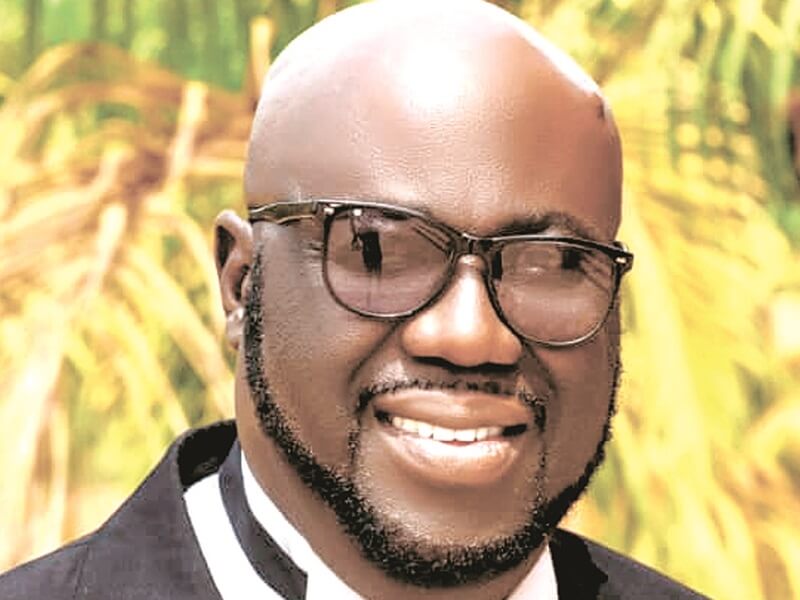

By Ifeanyi Igwebike Mbanefo
Every person of Igbo descent asks himself this question daily: Why are we (Igbos) the butt of hate in Nigeria? It is a question that I have privately grappled with.
However, I am happy to say that the problem is neither in our stars nor in ourselves, although we have some work to do. And miles to cover.
The answer is rather simple and straightforward. The largest minority group everywhere faces the most hate. That's human nature. In Nigeria, Ndi Igbo is the biggest minority after the indigenous majority in every part of the country, except in the South East where they are majority.
This supports Prof. Chinua Achebe's hypothesis that if Nigerians cannot agree on any other thing, they will reach a consensus of their hatred of Ndi Igbo. This largest and arguably the most prosperous. And the most daring!
The more people understand how and why prejudice develops, the more empowered they may feel to fight it.
Don't just take my word for it. There's a whole body of research backing this assertion.
A community's biggest minority group endures the most discrimination from the majority which fears losing status, says research by Marco Tabellini and colleagues from Harvard University.
Findings from 20 years of crime and demographic data have proved this point.
When the minority group becomes larger, the majority group feels more threatened.
The latest study, published in August this year, suggests that hate crimes against minorities tightly track with the relative rank of a group in any given community.
A minority group ranked as the largest experiences the most discrimination, followed by the second-largest group, and so on, explains Harvard Business School Assistant Professor Marco Tabellini, one of the paper’s authors.
Why does this happen? According to Tabellini, people fear losing status and access to public resources or jobs, as has long been posited in sociology and psychology literature.
When the minority group becomes larger, the majority group feels more threatened, says Tabellini.
This is why we think rank matters, because it sends you a more concise measure of how likely a minority group is to frighten the majority.
And sometimes the largest minority act in a way, albeit, inadvertently that confirms the fear of the majority.
A few examples:
- Zik bidding to be the premier of Western region 1a. Who imagines Lagos governorship candidates printing posters in Ishi Agu attires and visiting Igbo groups to canvass for votes every election cycle would endear Ndi Igbo to the owners of the land. It is a confirmation of their worst fears!
- Peter Obi defeating Tinubu in Lagos and in some Western states was the evidence. That's why bigotry is on the rise!
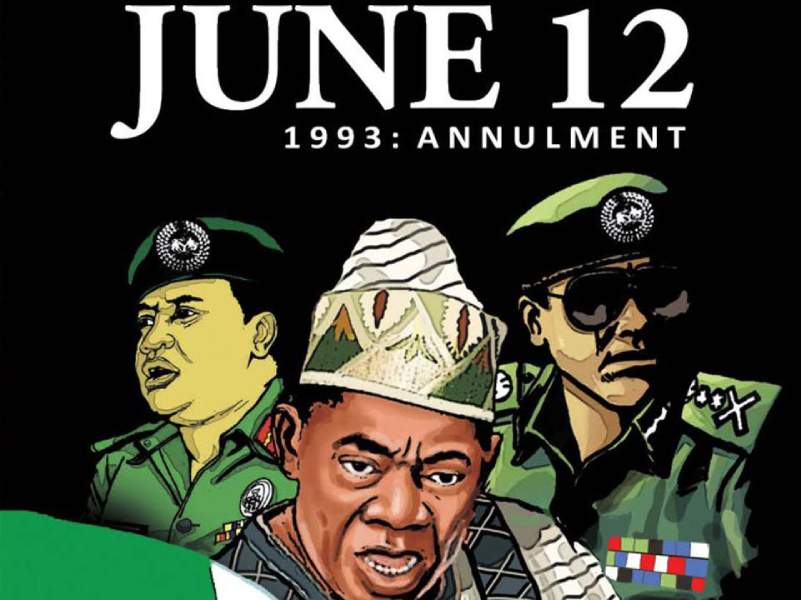
- Nzeogwu, catholic/christian/Igbo almost wiped out the gains of 100s of years of Jihad. It is like a Christian taking over power in Saudi Arabia. It is overwhelming, thinking about it and the implications, which we have to live with today.
Only a guy with Nzeogwu's biography, who for all practical purposes was a northerner, having dropped Patrick, his christian name for Dan Kaduna, a nickname given by an Hausa neighbor would contemplate that endeavor...and it was because he was a northerner at heart. Or raised a northerner!
Long before the coup, his elder brother, Mark, became a Moslem and cut off all contacts with Igbos.
This is why our brothers in Rivers and Delta deny their Igboness to make themselves less threatening. Or simply adopt English surnames to obscure their identity. William Godwin and Emmanuella Favour are Igbos.
But then I digress.
This research should help policymakers and minorities to spot tension before it begins. It explains why Nigerians, the ranking minority in South Africa, Kenya, Ghana and other places are objects of discrimination.
It is not an Igbo problem. It is a human problem. Every town has a minority they hate. Same with every state. In Enugu State, it is Ndi Anambra. In my town, Obosi, we moved from Ndi Nkpor, to Ndi Imo to Ndi Abakaliki as their ranks and status changed.
For races or ethnicities struggling to confront systemic prejudice, awareness of this aspect of human nature could inform policy approaches that prevent discrimination.
Documenting how size matters Tabellini and colleagues looked at US hate crimes against four racial and ethnic minority groups: Blacks, Hispanics/Latinx, Asians, and Arabs between 1990 and 2010.
Using data from the Federal Bureau of Investigation and the Census, the researchers compared the number of reported hate crimes during those years with demographic shifts.
They found that as a minority group climbed in rank, or in size relative to another group, it was more likely to be the target of discrimination.
The effect remained constant no matter the group size and proportion, and no matter how fast or slow a group’s growth rate.
The data predicts that a group that moves from last to first in rank will experience an almost 62 percent increase in frequency of hate crimes.
“It doesn't really matter how large a minority group is in absolute values or levels of growth,” says Tabellini. “What really matters is whether you are the largest or not.”
When demographics change, so do attitudes.
One question the researchers considered: Would white people still be racist toward the most prominent minority group as new groups arrived and grew?
After all, if whites were to hold onto such prejudices, they would risk the misery of being surrounded by an ever-increasing number of “competitors.”
Therefore, they theorized, whites might become more inclusive toward smaller groups they deemed less threatening.
Civil rights activists gained momentum when they collaborated with J. F Kennedy
Imagine if our over 102 traders association are in collaboration with Yoruba traders or brought them into their fold. They will make all resources of the state accessible if we collaborate and give them comfort.
Egbe belu Ugo belu. The walls are closing in on us, let's add collaboration to competition.
“Changes in the composition of society due to changes in the size of one group have a trickle-down effect on the relationship between the majority group and all other groups in the society.”
This is exactly what the researchers found. As minority groups dropped in rank, they were substantially less likely to be targeted with hate crimes.
Ndi Igbo are resilient and will remain top dogs for the next 100 years.
Tabellini points to a previous study in which whites became less discriminatory toward African Americans as immigration from Mexico expanded between 1960 and 2010. Hate crimes against African Americans dropped during that period and animosity toward Mexican immigrants rose.
“Changes in the composition of society due to changes in the size of one group have a trickle-down effect on the relationship between the majority group and all other groups in the society,” says Tabellini. “And the direction of these changes depends on the characteristics of the growing minority.”
The findings could inform the future of race and ethnic relations everywhere. In the United States, the proportion of Asian Americans and Hispanic Americans is quickly outpacing African Americans, meaning that Asian Americans may eventually become the largest nonwhite group.
Recall Donald Trump's warning that Americans are giving away black jobs! It comes from rising rank and status of Asians and Hispanics...the new threat.
“If there are political or economic incentives, the majority group might actually become more supportive of minority group members.”
This is the job of Ohaneze and other Igbo groups if we intend to find peace and acceptance with our neighbors.
“We’re likely to see increased animosity against the groups that become largest, and perhaps lower discrimination against the groups that were the largest but that eventually become instead, say, the second or third rank in the distribution,” he says.
Discriminatory practices and negative attitudes may even bleed into hiring practices and the labor market. Policymakers, activists, and business leaders can take steps now to prevent it by:
Spreading awareness.
Seeking collaboration with owners in business and other ventures.
Policymakers could initiate awareness campaigns to help people understand the challenges minority groups face.
There are ready examples. As African Americans fled the harsh Jim Crow laws of the South between 1940 and 1965, they shared their experiences with white people in cities such as Chicago and Detroit. As that awareness spread, more Northern whites began to express support for civil rights, Tabellini says.
“The arrival of African Americans increased the knowledge among whites of systematic lynchings and brutality against African Americans in the South,” he says.
Building coalitions. Majority and minority groups can find strength and support by banding together, says Tabellini. It’s an approach that has worked in the past: The labor movement actively sought to recruit African Americans at least until the mid-1960s to increase its bargaining power with companies.
Inter-group interactions help foster trust and reduce stereotypes.
Fighting complacency. Racism and discrimination may not be as intransigent as we often imagine, Tabellini says.
The more people understand how and why prejudice develops, the more empowered they may feel to fight it.
If we recognize this human failing, we can solve the problem rationally. It is a human problem; not an Igbo problem.
If the leadership of Ndi Igbo understand this, then their work is cut out for them.
Thank you most kindly.
...Ifeanyi Igwebike Mbanefo is a public