

By Celestine Okafor (Editor-in-Chief)
The Executive Director of Civil Society Legislative Advocacy Centre (CISLAC), the national chapter of Transparency International (TI) in Nigeria, Comrade Auwal Ibrahim Rafsanjani, has blamed the massive corruption in African societies and governments and its attendant lack of accountability in public governance, on what was described as 'Dirty Money'. He said this development has substantially impeded the growth of democracy, economic and infrastructural developments, and good governance.
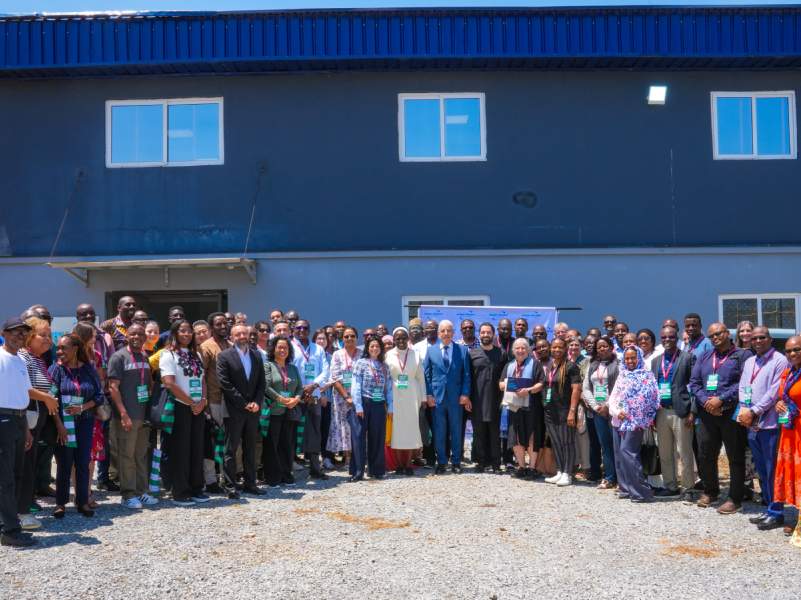
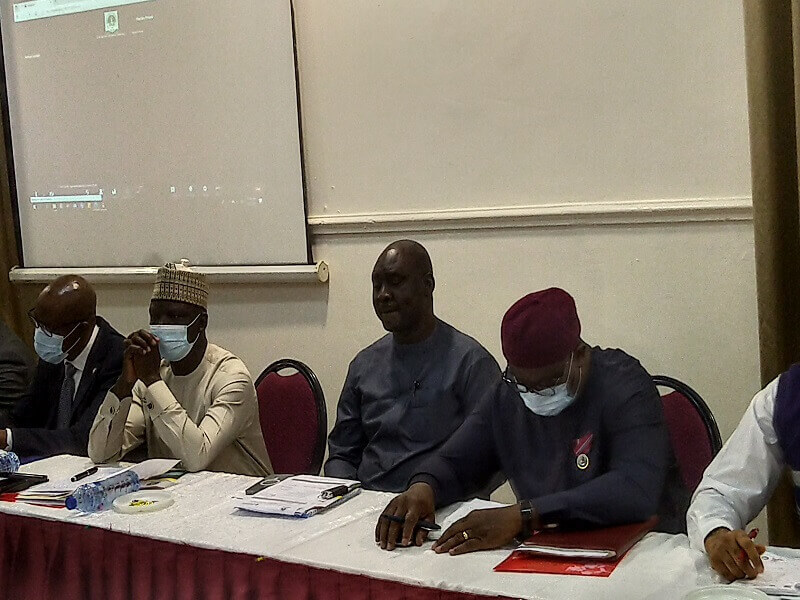
Rafsanjani and representatives of stakeholders in the other Civil Society Organizations (CSOs), the anti-graft agencies of government, the National Assembly, Nigeria's electoral body (INEC), the media, and other invited guests, spoke at an inception meeting on “Strengthening Accountability Networks Among Civil Societies (SANCUS) in Nigeria”. The event held on Tuesday, September 7, 2021, at the Bolton White Hotel, Area 11, Garki, Abuja.
CISLAC's "SANCUS" is a project which runs from January 2021 to December 2023 and is being implemented by Transparency International Secretariat through its chapters in 21 countries with support from the European Commission.
CISLAC, as TI Nigeria, is therefore currently implementing this project in Nigeria with the focus on solving the core problem of dirty money in Nigeria’s politics, which often perpetuates a culture of lack of accountability and corruption for power preservation and self-enrichment. The aim of the project is to improve the democratic accountability of public institutions globally by empowering CSOs, Anti-Corruption agencies, and the media, to demand systemic change to address accountability and anti-corruption deficits.
Rasfanjani who was recently elected chairman of Transition Monitoring Group (TMG), however, stated that in Nigeria, the ever-increasing and soaring problem of dirty money in the Nigerian politics suggests a high level of impunity among politically exposed individuals who seek to gain power and accrue wealth through illegal means with zero accountability, maintaining that this has been a growing concern locally and internationally.
He pointed out that SANCUS Project was introduced to address this core problem of dirty money in Nigeria’s politics which perpetuates a lack of accountability and corruption culture for the preservation of power and self-enrichment.
According to Rasfanjani, the project plans to advocate for the operational independence of anti-corruption agencies; to increase enforcement of existing anti-money laundering provisions and policies; to improve oversight function of the National Assembly; to improve the capacity of the media and civil society to investigate the presence of dirty money in Nigeria’s political processes and also to increase citizen's demand for accountability in the funding of political processes.
He opined that these measures, hopefully, will instil some level of sanity in the Nigerian political elites whose actions continue to tarnish the good image of the country as a democratic space that operates within the purview of maximum respect for the rule of law.
Comrade Rasfanjani who doubles as the head of the Nigerian arm of the global civil rights organization, Amnesty International (AI) Nigeria, however, lamented to the gathering, that "illicit financial flows are a serious problem globally and we all know the damage it had caused in Nigeria. Nigeria is the largest Illicit Financial Flows offender in the continent with about $18bn estimated to be lost annually. This figure is likely to increase, if necessary, measures are not taken to curb the excesses of these crimes.
"For instance, we are battling different scandals like the P&ID scandal where Nigeria is contesting the arbitration award of about $6.6bn with an interest of 7% annually and the Malabu Scandal. The sad part is that after citizens are deprived from access to basic needs and the diversion of funds meant for the covid-19 response, these funds, at least in part, are stashed either at home or abroad or in Real Estates and other assets, only to be used when it is time for political campaigns and elections. This is the challenge we are up against, and we should ensure that all hands are on deck to combat this.
The public accountability and civil rights activist also said the SANCUS Project came to Nigeria at a critical period of the pre-election for 2023 general elections. "We all know what is at stake and I would like to invite us to discuss how to mitigate the role of dirty money in the upcoming electoral circle. On the positive side, the necessary institutional and legal infrastructure is in place. We have the Independent National Electoral Commission and laws in place, that, in theory, should regulate how money enters politics. We also have a myriad of anti-corruption agencies and law enforcement that is getting ever better in investigating financial crimes. On the negative side, we seem to have so much money in politics that it seems to have the power to erode our institutions. Our laws are not enforced or are outrightly ignored.
"According to the widely shared public opinion, political contest has little to do with ideas but rather corruption and populism take the upper hand. This crisis of the image of politics have led to widely disillusioned public electorate that expects profiting from the corruption instead of trying to stop it. In the last general elections, over one quarter of voters came to the ballot box with the offer to sell their vote to the highest bidder. There is crisis on the top but equally on the bottom – at the grass-root level.
"Therefore, the objective of this meeting which is the first under this project is to share the project objectives and expected outcomes with you, our distinguished participants", Rasfanjani explained.
He however thanked the Transparency International Secretariat (TI-S) in Berlin, Germany, the European Commission, the media in Nigeria and the management of CISLAC, for their unwavering support for the on-going SANCUS Project.
In his own contribution, National Commissioner, Information and Voter Education of the Independent National Electoral Commission (INEC), Barrister Festus Okoye, spoke on the statutory powers of the electoral umpire to organize, undertake and supervise elections at all levels in Nigeria. These powers, according to Okoye, also include power to register political parties; monitor their organization and operation including their finances. The Commission is also expected to arrange for the annual examination and auditing of the funds and accounts of political parties and publish report on such examination and audit for public information.
Okoye pointed out that by section 225 of the Constitution, political parties are required to submit and publish a statement of their assets and liabilities; submit a detailed annual statement and analysis of their source of funds and other assets together with a similar statement of their expenditure.
Furthermore, he stated that section 92(3)(b) of the Electoral Act, 2010(as amended) also provides sanctions for failure to submit election expenses report. The sanction imposed is to the effect that the defaulting political party shall, on conviction, be liable to a maximum fine of a N1million. Additionally, section 92(6) of the Electoral Act 2010, he explained, provides that any political party that incurs election expenses beyond the limit stipulated in the law, is guilty of an offense and shall, on conviction, be liable to a maximum fine of N1million and forfeiture to the Commission of the excess amount.
The INEC Commissioner, therefore, stated that "It is evident that the sanctions provided in the constitution and the law is ridiculously mild and possibly accounts for the disdain currently being exhibited by political parties and their candidates in complying with directives relating to party finances and election expenses".
The civil society groups and other relevant organizations, he urged, must "mount and sustain advocacy for reasonable, rational and deterrent sanctions against the leaders of political parties and the parties for violation and willful refusal to comply with the law and the constitution relating to party finances and election expenses. The sanctions must include an increase in the fines and prison terms for the leaders of defaulting parties.
"Furthermore, civil society groups must advocate for the inclusion of refusal of political parties to render an account of their finances as one of the conditions for de-registration of political parties.
"As a Commission, we support the creation of an Electoral Offences Commission and Tribunal that will have exclusive mandate and jurisdiction to investigate, arrest and prosecute electoral offenders. We believe that the lack of robust investigation and prosecution of offenders accounts for the serial infraction of the provisions of the Constitution".
Okoye said in the interim, INEC will continue to play its role as an umpire and regulator and ensure that the electoral process is not adversely impacted through unwholesome practices.
"The Commission will continue to collaborate with civil society groups and other critical stakeholders in promoting transparency in party financing to mitigate unwholesome practices aimed at compromising the democratic choices of the people.
"The Commission will also continue to collaborate with the security agencies and other law enforcement outfits within the ambit of the Inter-Agency Consultative Committee on Election Security in combating illegal financial flows and vote trading to protect our democracy
"We believe that the sovereign right of the people as expressed through their votes must remain the only source of truth in relation to leadership succession. Illegal, extrajudicial and extra- constitutional measures planted to distort and render useless the value of the vote and the quality of mandate given to the people, must be vigorously resisted.
"We therefore encourage civil society groups and organizations to act collectively to protect the electoral process and our democracy", Okoye submitted.
Other representatives from the Independent Corrupt Practices and Other Related Offences Commission (ICPC), the National Orientation Agency (NOA), the Nigeria Financial Intelligence Unit (NFIU) represented by Dr Kehinde Oginni; the Anti-Money Laundering and Counter-Financing Terrorism Civil Society Organizations Forum Nigeria, among others, made significant contributions to the success of the event. NNL.