



* Plus Knowing When Your Gas Cylinder Has Expired
By Olisaemeka Onubogu (Energy Products/Services Reporter)
Cooking gas cylinders are an essential facility in our domestic kitchens. In this day and age when it is the most preferred mode of cooking meals at homes, hotels, restaurants, party venues, etc, it has become absolutely necessary that this vital cooking equipment should be adequately cared for. Here are some simple tips to care for your gas cylinders:
Stop placing your gas cylinder in the vehicle boot. This is because it has potential and avoidable dangers to you and to the cylinder itself. Carrying gas cylinders in your car boot prevents ventilation/air circulation to the cylinder. Gas cylinders in vehicles must be placed upright and not downwards. It should not be allowed to roll around in the boot. And should not also be placed on the car seat.
When transporting your gas cylinder, do so safely by removing any connected accessories before transport.
Always transport the cylinder in a secured upright position. Keep it standing and don't allow the cylinder to roll around during transport.
Keep the windows of your car slightly open to allow for adequate air ventilation.
Remove the cylinder from the vehicle as soon as you arrive at your destination to avoid the risk of overheating.
Never leave a gas cylinder in a parked vehicle for an extended period! This is because overheating leads to cooking gas explosions. Heat builds up quickly in a parked vehicle without adequate ventilation, and that can lead to cylinder explosion.
Gas is stored in cylinders under high pressure. Therefore, lying a cylinder down on its side applies a lot of pressure on its valve, this weakens it over time and will eventually result to leakages from the valve.
Gas accessories are not as strong as the cylinder valve, they can easily get damaged during transport resulting in dangerous gas leakage. Therefore, remove them before transport.
Gas leakages can lead to fire from the heat, electronic devices or naked flame. Do not transport cylinder with a leaking/damaged valve.
KNOWING WHEN YOUR GAS CYLINDER HAS EXPIRED!
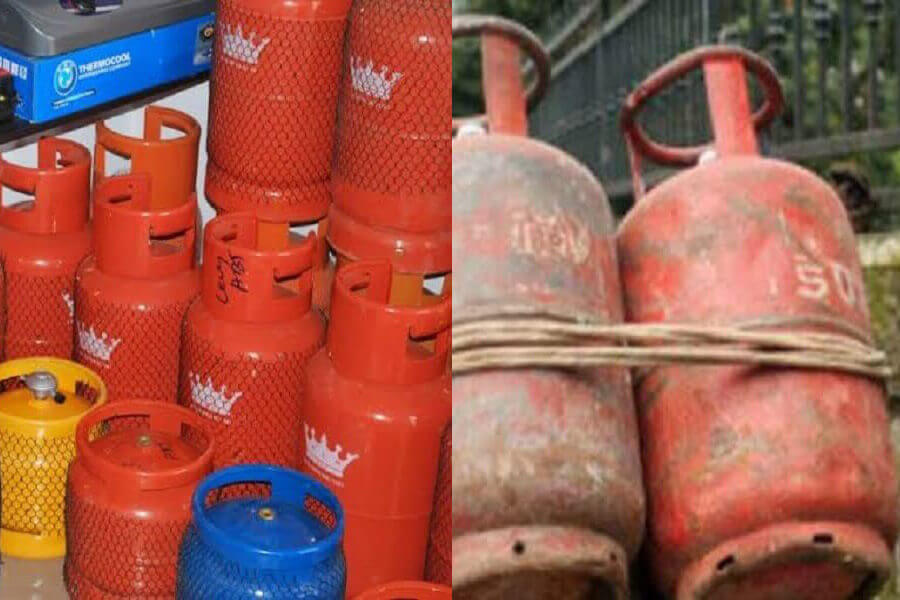
Gas cylinders expire after 15 years from the date of manufacture. If your gas cylinder has rust all over it and are discolored and looking worn out, then it is probably long expired, and therefore should be changed immediately.
Read Also: NAFDAC WARNS ON HEALTH IMPLICATIONS OF SEX ENHANCING DRUGS
Gas is stored under pressure in a cylinder. As a result, the pressure continually applies force on the body of the cylinder, making the joints weaker over time. The older your cylinder, the weaker the cylinder structure.
Continued use of an expired cylinder is extremely dangerous. The cylinder structure is weak and can burst open at the slightest external pressure or exposure to heat. This will lead to a dangerous gas leakage and a possible explosion! The loss is not worth it, so replace the cylinder immediately.
To check the date of manufacture of your gas cylinder, check the cylinder handle for its information markings and find the "Test Date" or "TD". The Test Date marked on the cylinder is the date the cylinder was manufactured.
It may look like this: "Test Date: 05/98". This means the cylinder was manufactured in the month of May 5 of year 1998. In this case, the cylinder would be 23 years and is long expired! For easy assessment, if the Test Date inscribed on your cylinder, as of today (Tuesday, December 28, 2021) is earlier than say May 2006, it is older than 15 years and is already expired.
If you do not find the markings on the handle of your cylinder, check the foot ring. If the markings are old enough to have faded by rust, and is no longer visible, the cylinder is probably expired. (source: Instagas Review). NNL.