By Celestine Okafor (Editor-in-Chief) @CeleOkaf11
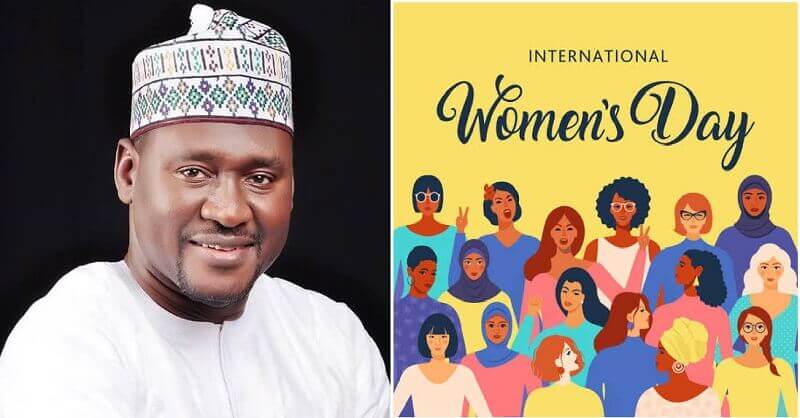
As the world commemorates International Women’s Day, a foremost Non-Governmental Organization (NGO) in Nigeria, the Civil Society Legislative Advocacy Centre (CISLAC), has called for the abolition of all long-standing unfair practices, stereotyping, and discrimination of women and girls on all fronts.
This year's campaign by the Civil Society group under the hashtag CISLAC #ChooseToChallenge is geared towards challenging and raising sufficient awareness to the years of injustices and all forms of disparities such as Gender-Based Violence (GBV), political and economic exclusion, education disparity, sexploitation and maternal mortality rate, which, according to the CISLAC, stands at 917/100,000 live births as at 2017 (World Bank, 2000-2017).
A statement by the Executive Director of CISLAC, Comrade Auwal Ibrahim Musa Rafsanjani, which was issued on Monday, March 8, 2020, being a day set aside every year to mark the International Women's Day by the United Nations, said this year's global recognition and celebration of women presents a veritable unique opportunity to challenge all negative and unfair female gender practices and actions that have militated against the realization of the full potentials of women and debasement of womanhood in most parts of the world.
Quoting the 2018 Nigeria Demographic and Health Survey, however, CISLAC said this survey claims that "31% of women between ages 15 and 49 have experienced physical violence while 9% have experienced sexual violence. It is pertinent to note that the lockdown due to the Covid-19 pandemic has further worsened this situation. Sadly, the political commitments to addressing issues of gender inequality have been lacking in Nigeria. The result of the lack of commitment is evident in the 2017 Global Gender Gap report where out of 144 countries, the country ranks 122nd in closing the gender gap; where one in every three Nigerian women has suffered physical and/or sexual violence".
According to CISLAC, "The Nigerian political space lacks gender-focused inclusion. Globally, Nigeria ranks 181 out of 193 countries for female representation in parliament. For the 2019 general elections, only five of the 73 candidates who contested for the presidency were women. Also, women make up only 4% of the elected officials after the elections. Out of the 469 members of the national assembly, only about 7% are women. Of all the principal officers in the national assembly (Senate and House of Representatives), only 1 is a woman. Policymakers in Nigeria must recognize that there are developmental costs of ignoring women and denying them access to decision-making and key resources.
"In the area of education parity, access to education for school-age girls in Nigeria is also low. Statistics from Nigeria’s Universal Basic Education Commission (UBEC) showed that males had higher enrolment numbers for basic education as of 2018 than females".
CISLAC also stated that "The insecurity issues in Nigeria, has further exacerbated the already existing educational inequality as shown in the level of school enrolment. Young school girls have become soft targets for terrorists who have on several occasions adopted school girls in large numbers within the school environment with some of these girls still in captivity after years of negotiations with the government. While we have also seen the adoption of young schoolboys, we find it worrisome to see that usually, the boys are returned in their complete number while the same cannot be seen in the adoption of girls. This cannot be taken away from the kind of sexual exploitation which these girls may face.
"We are concerned further about the issue of sexual exploitation (sexploitation) which is fast becoming a norm in schools, workplaces, and at the domestic front. It is no longer news that people who are saddled with the responsibility of grooming, imparting knowledge, and providing supervisory roles in workplaces and at home have resorted to sexually exploiting women and girls", Rafsanjani said in the CISLAC statement.
The Civil Society group however explained that in this year, 2021, CISLAC, as a foremost rights organization to champion the following as already expressed in their hashtag (#ChooseToChallenge):
That "We #ChooseToChallenge the National Agency for the Prohibition of Trafficking in Persons (NAPTIP) and other relevant government agencies to prosecute reported cases of GBV.
That "We #ChooseToChallenge political parties to amend their constitutions and make deliberate efforts for inclusive party decision making as well as an emergence into elective positions for women.
That "We #ChooseToChallenge the legislature to amend all relevant laws to promote inclusion of women in decision making.
That "We #ChooseToChallenge the government to fully implement the Safe School Initiative to guarantee the safety of school children, especially the girl child.
That "We #ChooseToChallenge relevant authorities to provide the enabling environment for reporting cases of sexual exploitation and prosecute reported cases.
That "We #ChooseToChallenge state governments to adopt and implement the Violence Against Persons (Prohibition) Act of 2015 into their state laws.
That "We #ChooseToChallenge the government to fully implement the 35% affirmative action at all levels.
That "We #ChooseToChallenge the dysfunctional and poor access to health care for women which leads to maternal mortality and malnutrition".
CISLAC maintains that as a Civil Rights organization, "we ride on the opportunity of the International Women’s Day 2021 and in alliance with the theme of this year’s celebration #ChooseToChallenge, call for bridging the gap of the growing gender disparity in the country", said Comrade Rafsanjani. NNL.